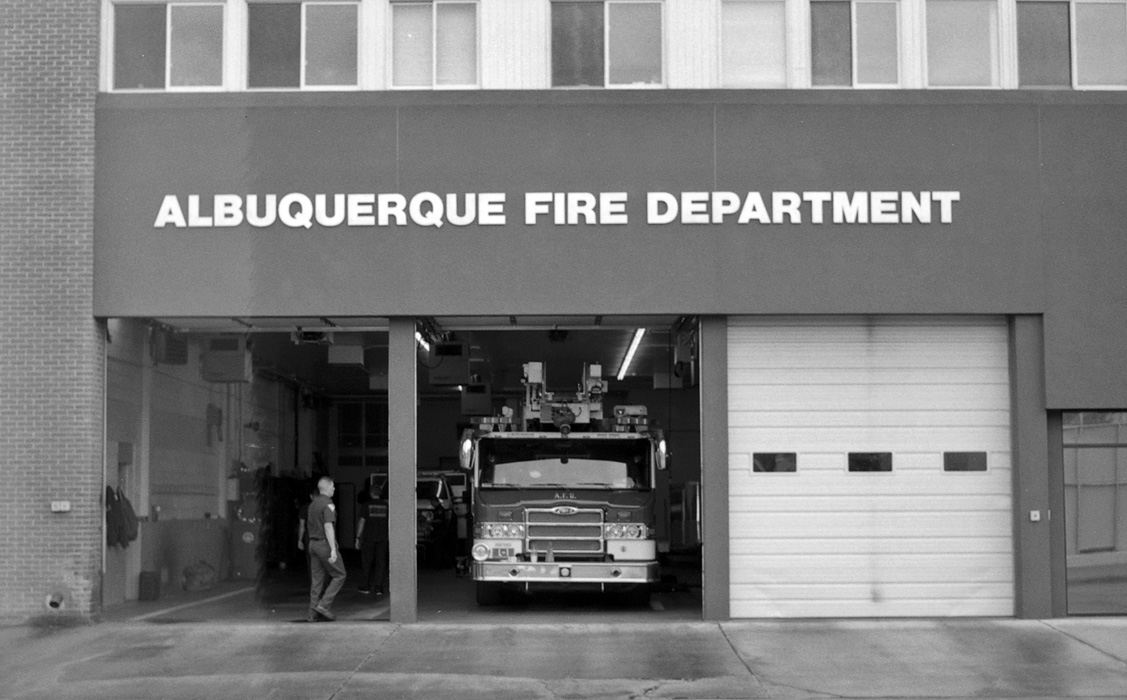
I said recently that I have five Kodak Retinas, forgetting my Retina Reflex. I haven't shot the camera in over ten years because of a cloudy view due to a deteriorated prism. Everything else on the camera works pretty well, so I may try to do something about replacing the prism.
I managed to muck up the shutter in the process of cleaning the camera recently so that the aperture would not close down properly. I did not discover that until I had shot a roll of Fuji 200. The aperture malfunction caused some over- exposure and some depth of focus issues. I think I've got the shutter working properly now, and I have my eye on a couple '80s Minoltas on ebay which might work as prism donors. Also had some double exposures toward the end of the roll; not sure what that is about.
Here a couple of shots from the last time I shot the camera which show something of the potential of the Xenon lens:
Tuesday, September 25, 2018
Sunday, September 23, 2018
An American Journey
Christie's is auctioning the Diann G. and Thomas A. Mann Collection of Photographic Masterworks in October. The 277 page catalog for the collection can be purchased from Christies, or it can be downloaded free as a pdf file. This is an amazing collection of photographic images spanning a century of photography, with detailed notes for each item. Thanks to Mike Johnston of The Online Photographer for the heads-up.
Saturday, September 22, 2018
Simplicity
I like the elegant simplicity of my compact Kodak Retina I; it has just what is needed for making high quality images, and nothing more. Mine is a Type 010 made just after WWII. The camera came equipped with a Xenar lens, but I could not seem to remove the dense haze on the lens surfaces, so I transplanted an Ektar from a junker.
The camera is easily pocketed, and uncomplicated to use once you are accustomed to its capabilities. Having not used the camera in some time I slightly misjudged the compensation needed for parallax correction on many of the frames on this recent roll of Kentmere 100. The viewfinder is low and well-centered over the lens, and it requires much less adjustment of the image in the viewfinder than is true of the II and IIa rangefinders.
Using a camera without a rangefinder can be challenging in low light. With normal open sky conditions, however, a little care in distance estimation and focusing produces good results. The early Retina I models like mine incorporated a depth of field dial on the camera's bottom which is a good help in determining the range of sharp focus yielded by the selected aperture. For instance, if you are shooting on a sunny day, the dial shows that with the aperture at f-16 you can set the focus to the hyperfocal distance of 13 feet (4 meters) and everything from about 7 feet to infinity will be sharp.
The camera is easily pocketed, and uncomplicated to use once you are accustomed to its capabilities. Having not used the camera in some time I slightly misjudged the compensation needed for parallax correction on many of the frames on this recent roll of Kentmere 100. The viewfinder is low and well-centered over the lens, and it requires much less adjustment of the image in the viewfinder than is true of the II and IIa rangefinders.
Using a camera without a rangefinder can be challenging in low light. With normal open sky conditions, however, a little care in distance estimation and focusing produces good results. The early Retina I models like mine incorporated a depth of field dial on the camera's bottom which is a good help in determining the range of sharp focus yielded by the selected aperture. For instance, if you are shooting on a sunny day, the dial shows that with the aperture at f-16 you can set the focus to the hyperfocal distance of 13 feet (4 meters) and everything from about 7 feet to infinity will be sharp.
Sunday, September 16, 2018
Albuquerque Color
My bicycle is one of my best photography accessories; it lets me explore places in the city that I might not otherwise get to. I took a couple rides in the last week through the Old Town and Downtown districts carrying along my Retina Ia which easily fits in a pocket; it was loaded with Fuji 200.
The Ia model, produced from 1945 to 1949 is a direct descendant of the original Retina which kicked off the era of 35mm photography in the mid-1930s. A number of variations on the first model appeared in the pre-war years, but the pace of development rapidly gained additional momentum after the war. Enhancements incorporated into the Ia included a lever advance coupled to a Synchro-Compur shutter with speeds to 1/500, a depth of field scale on the lens mount, and a synthetic leather-like covering that precluded the development of Zeiss bumps. My example has a sharp Xenar lens. The Wikipedia Retina page is very helpful for sorting out the many models in the line.
Chris Sherlock has a great series on youtube about servicing the Retinas
The little Gossen Pilot meter is a nice companion to the Model-Ia for light-weight travel.
The Ia model, produced from 1945 to 1949 is a direct descendant of the original Retina which kicked off the era of 35mm photography in the mid-1930s. A number of variations on the first model appeared in the pre-war years, but the pace of development rapidly gained additional momentum after the war. Enhancements incorporated into the Ia included a lever advance coupled to a Synchro-Compur shutter with speeds to 1/500, a depth of field scale on the lens mount, and a synthetic leather-like covering that precluded the development of Zeiss bumps. My example has a sharp Xenar lens. The Wikipedia Retina page is very helpful for sorting out the many models in the line.
Chris Sherlock has a great series on youtube about servicing the Retinas
The little Gossen Pilot meter is a nice companion to the Model-Ia for light-weight travel.
Labels:
Albuquerque,
Fuji 200,
Gossen Pilot,
Kodak Retina Ia,
Unicolor C-41
Tuesday, September 11, 2018
Too Many Retinas
I have five models of Kodak's post-war Retinas, all working well with fabulous lenses. The three rangefinder models have the 6-element Xenon. The lenses on the viewfinder cameras are both Tessar-types; the Retina I has an Ektar and the Retina Ia is equipped with a Xenar. I get around to shooting one or the other every few years, and never cease to be impressed with the quality images they deliver. Recently, I decided to put film through all of my Retinas. Over the last week I shot some Kentmere 100 in the Retina II, which was the first of the line I acquired about fifteen years ago.
I had to do some minor repairs to the Retina II when I got it. The bellows was partially detached and the shutter seemed to be a bit sluggish. I opened the shutter and cleaned it about three times, but the sound it made when tripped was nearly inaudible, and I was convinced for a long time that the main spring was weak. On looking at the pictures from the camera made over the years, however, I think the Compur Rapid is just an extremely quiet shutter and mine seems actually to be working just fine.
Tuesday, September 04, 2018
Downtown
All five of my Kodak Retina cameras are post-war models that have excellent lenses. The IIc is looks nearly new and works very well. The others show more wear, but are still very capable shooters. My goal is to spend some time with each of them over the next month.
Labels:
Albuquerque,
HC-110B,
Kodak Retina IIc,
mastreei,
Tmax 100
Wednesday, August 29, 2018
Fly-in
I took a drive over on Albuquerque's west side on Saturday with no particular destination in mind. Passing the Double Eagle airfield I noticed that there were a lot of cars parked near the entrance. It turned out I had stumbled on a fly-in airshow.
I had a couple frames left on a roll of Kentmere 100 in my Retina IIa, so I shot those and then loaded a roll of Fuji 200 color. If I had known where I would end up from the beginning, I might have chosen to bring along an slr and a couple lenses, and maybe a medium-format camera. However, I can't complain about the performance of the Kodak rangefinder and its fine Xenon lens.
The half-dozen sleek little planes that were lined up beside the runway put on a nice aerobatic show, complete with smoke trails.
I think this is the third light plane show I have seen at the west side field. The previous show featured rides in a Ford Trimotor, which I believe is due back in Albuquerque in November.
I had a couple frames left on a roll of Kentmere 100 in my Retina IIa, so I shot those and then loaded a roll of Fuji 200 color. If I had known where I would end up from the beginning, I might have chosen to bring along an slr and a couple lenses, and maybe a medium-format camera. However, I can't complain about the performance of the Kodak rangefinder and its fine Xenon lens.
The half-dozen sleek little planes that were lined up beside the runway put on a nice aerobatic show, complete with smoke trails.
I think this is the third light plane show I have seen at the west side field. The previous show featured rides in a Ford Trimotor, which I believe is due back in Albuquerque in November.
Sunday, August 19, 2018
An Argus Day
Saturday was proclaimed to be a day to celebrate the Argus cameras.
I used my Argoflex Forty to honor the day along with one of the last rolls of Fuji Acros that I'm likely to shoot. I'm not sure how 8/18/18 figures into the equation, but it seems as good a day as any to recognize the often-underrated line of American industry.
I chose to develop the Acros in Rodinal which has always been my favorite combination. The negatives seemed a little thin, possibly due to the fact that the bottle has probably spent about five years in the refrigerator.
The Argoflex Forty has been a very reliable performer for me over the years, producing images that look as good to me as those coming from much more sophisticated and expensive cameras.
I've also been happy with the pictures I've gotten from my other Argus cameras, including the C-3 and the Argus A cameras. I'll try to get back to doing something with them again too.
I used my Argoflex Forty to honor the day along with one of the last rolls of Fuji Acros that I'm likely to shoot. I'm not sure how 8/18/18 figures into the equation, but it seems as good a day as any to recognize the often-underrated line of American industry.
I chose to develop the Acros in Rodinal which has always been my favorite combination. The negatives seemed a little thin, possibly due to the fact that the bottle has probably spent about five years in the refrigerator.
The Argoflex Forty has been a very reliable performer for me over the years, producing images that look as good to me as those coming from much more sophisticated and expensive cameras.
I've also been happy with the pictures I've gotten from my other Argus cameras, including the C-3 and the Argus A cameras. I'll try to get back to doing something with them again too.
Wednesday, August 15, 2018
what's up
I've spent the last week making cyanotype contact prints from old medium format negatives.
I'm using pre-coated cyanotype paper from a couple little packets I picked up in museum gift shops that are usually promoted as a craft project for children. The paper is kind of flimsy, but it makes pretty good images with a couple of minutes exposure on a sunny day. The paper is only sensitive to ultraviolet light, so the sandwich of cardboard backing, paper, negative and plastic cover sheet can be assembled in subdued room light.
I like the small prints, and they don't take up much room in a small house with limited wall and shelf space. I've also enjoyed the process of finding small frames for the prints at local thrift stores. I have tried toning a few prints with green tea to yield a brownish image, but need to work at that a bit more to get the proper contrast.
I last made cyanotypes about twelve years ago. I coated watercolor paper using a two-component cyanotype kit. I was able to make large prints through the use of digital inter-negatives printed on Pictorico overhead transparency material. That whole process gave me a lot of control in making prints, but it requires a good digital printer which I no longer have. Contact printing requires relatively little space and equipment, and I'll probably pursue it further, possibly with other alternative media.
I'm using pre-coated cyanotype paper from a couple little packets I picked up in museum gift shops that are usually promoted as a craft project for children. The paper is kind of flimsy, but it makes pretty good images with a couple of minutes exposure on a sunny day. The paper is only sensitive to ultraviolet light, so the sandwich of cardboard backing, paper, negative and plastic cover sheet can be assembled in subdued room light.
I like the small prints, and they don't take up much room in a small house with limited wall and shelf space. I've also enjoyed the process of finding small frames for the prints at local thrift stores. I have tried toning a few prints with green tea to yield a brownish image, but need to work at that a bit more to get the proper contrast.
I last made cyanotypes about twelve years ago. I coated watercolor paper using a two-component cyanotype kit. I was able to make large prints through the use of digital inter-negatives printed on Pictorico overhead transparency material. That whole process gave me a lot of control in making prints, but it requires a good digital printer which I no longer have. Contact printing requires relatively little space and equipment, and I'll probably pursue it further, possibly with other alternative media.
Monday, August 13, 2018
Subscribe to:
Posts (Atom)