Wednesday, September 30, 2009

At the Conservatory


I've attempted four or five times to clean up my old Contaflex 1. The last try seems to have gotten the shutter and aperture mechanisms functioning properly. I like these pictures mostly for that, but I was also pleased with the tonal qualities obtained from the C41 Kodak film.

Monday, September 28, 2009

2926 in color

I'm super pleased with the quality of the first images from my Argoflex 40, a bakelite twin lens camera from the 1950's.


Sunday, September 27, 2009

Visitor


Saturday, September 26, 2009

2926 Update

The restoration team held an open house this morning to show off their progress on the locomotive.


The Santa Fe 2926 was one of the last steam locomotives built in the U.S. It was operated from 1944 to 1953, travelling about a million and a quarter miles, often at speeds near 100 mph.

Recently, the cab was lifted back into place, and a set of new flue tubes have been purchased at a cost of $75,000. The ultrasound testing of the boiler showed no important problems, and the restorers project a new sense of optimism about getting the massive machine back on the tracks within a year or so.

These b&w photos were shot with one of my recently acquired Voigtländer Vito II cameras. I also did some color with a medium format camera from the same era, an Argoflex 40. I should have those negatives back from the lab on Monday.

An earlier set of pictures of the 2926 was made with my Agfa Clack.

Thursday, September 24, 2009

happy ducks


Selena brought Cate to meet us at Tingley Beach. The ducks held us captive briefly, but agreed to let us go following Cate's offering of all her Cheerios.

The camera was one of two Voigtländer Vito II which I recently acquired for shamefully low prices. A Vito was responsible for most of the photos and all the color that I shot on a trip to Greece a few years ago. Both the new ones have Compur-Rapid shutters that go to 1/500 and beautiful Color Skopar lenses. After I've done a bit more work with them, I'll update my web page on the Vito.

Tuesday, September 22, 2009

FOR RENT


There is an amusing article in today's Guardian about the the world's largest yacht:

"Roman Abramovich's latest extravagance, Eclipse, probably so-called because it's almost big enough to block out the sun, is the world's largest mega-yacht. Measuring 557ft long, it boasts two swimming pools, two helipads and an onboard missile defence system. And, just in case any missiles do get through, it comes complete with an escape pod: its own submarine. Its most curious feature, however, defends it against an altogether more insidious weapon: the prying eyes of the paparazzi."

The anti-paparazzi system detects nearby digital cameras, probably, by their focusing signal, and blasts the location with an obliterating flash of light. Of course, this only works if the paparazzi are toting digital cameras. All it takes to defeat the system is any old manually-operated film camera. Since I have quite a few such cameras in my collection, I figure I'm well-positioned to cash in on the niche market for specialized paparazzi gear.

Were I to undertake the photographing of celebrity high jinks on the Eclipse, my first choice would likely be one of the Folding Autographic Brownies as one of those was responsible for one of my favorite nautical shots from New England:


I also liked the results I got from my Olympus 35RC while visiting Portland, Maine:


And, my favorite travel camera, the Voigtländer Vito II, captured many fine marine scenes in the Greek Islands:

Sunday, September 20, 2009

Cate's Toy


Thursday, September 17, 2009

rainy day


Tuesday, September 15, 2009

Black and White


Monday, September 14, 2009

THE PHOTOGRAPHIC TIMES, 1908


Friday, September 11, 2009

More A2F Color


I had planned to try some b&w with my Argus, but the Tmax I ordered from Adorama took longer to get to me than anticipated. So, I threw in another roll of Kodak Gold 200 with the intent mostly of trying out the unusual close focusing capability of the A2F.

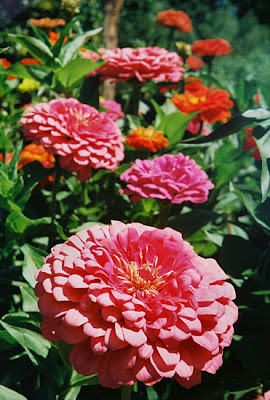
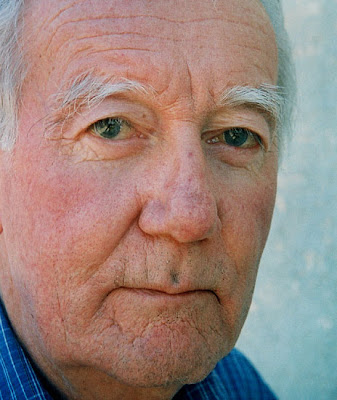
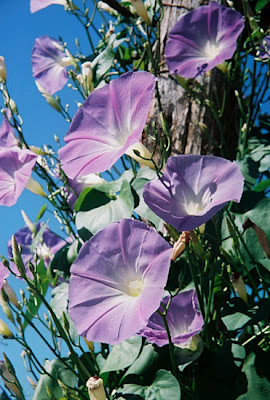


The photo of the red flowers was made by setting the focus to the minimum 15 inches and carefully measuring the distance to the flower from the front of the camera. Usually, focal distance is measured from the film plane, but Argus apparently decided that users would find a measurement from the camera front easier to deal with, and that was the instruction provided in the camera's manual.

The self-portrait was made at arm's length, again with the help of a tape measure with one end at the tip of my chin and the other at the camera front. The focal distance was 18 inches.

The last picture was a lucky guess with the the focal distance set to the minimum 15 inches. Several other guestimate shots didn't work. There just isn't enough depth of field when shooting that close to accommodate sloppy technique.

I've put what I've learned about the A2F so far into a page at my vintage cameras web site.

Wednesday, September 09, 2009

In the Garden


Monday, September 07, 2009

Morning at the Zoo


-------
9/8/09: The first picture above is a male snow leopard at the Rio Grande Zoo. There is an article with photos of snow leopards in their natural habitat at Wired.com.

Sunday, September 06, 2009

Argus Reading List


Glass, Brass & Chrome: The American 35mm Miniature Camera
Kalton C. Lahue and Joseph A. Bailey

This is an excellent general history of American-made cameras, published in 1972. There are substantial treatments of the Argus A and C lines. The book is well researched and well-written. The editing is another story; it may be the worst I have come across, with lengthy footnotes spread over multiple pages that make following the story a challenge at times. The great virtue of the book is that the authors write from personal experience, providing real insights into the features and foibles of the cameras discussed. Used copies can be found on line for as little as $10, though first editions can go for as much as $200; check Alibris.com. A lengthy preview of the book is available on line through Google Books.


Entering Germany: 1944-1949
Tony Vaccaro

Vaccaro, a WWII soldier carried his Argus C3 with him into Germany to record the end of the war there. I found a mention of this Taschen book in the Argus Camera Photographers Group on Flickr. A quick check at Amazon.com turned up a copy for less than eight dollars, so I couldn't pass that up. I'll report back once I have it in hand.


35mm For the Proletariat: A Modern User's Guide to the Argus A/A2 Camera
Hrad Kuzyk

This well-written book is an astounding labor of love by Kuzhk, who took his ancient Argus on a recent tour of duty in Iraq. I had it in the back of my mind to get an Argus A for a long time, and this book pushed me over the edge. As the author explains in his preface:

"This book is intended to be a user's guide, not a collector's guide. As such, it does not concern itself with current street value, scarcity, condition rating, or other such collector-related information. While there is much of this text of interest to a collector of Argus cameras, this book concentrates predominantly on those issues that would be of importance to a user."

Some features of the A-model Argus are not very intuitive, so this guide is a big help in getting started with the camera. The excellent illustrations of repair procedures just about guarantee that nearly any Argus A can be made functional. The book is available in its entirety on line as a pdf file at TheArgusA.com.

Saturday, September 05, 2009

Gustave Fassin Time Line


The name of Gustave Fassin is well known to Argus Camera collectors as the designer of the Argus A and C lines of 35mm cameras.

The following notes from on line sources document some steps along the way in Fassin's career, with most referencing his many patents in the area of precision optical instruments.

The first reference is an excerpt from a history of Rochester University's Institute of Applied Optics:


"In 1929, then University President Wilkins reported the appointment, part time, of Gustave Fassin, an employee of Bausch & Lomb, to teach mechanical design of optical instruments. A Belgian who had taught at the Technical School of Ghent and had charge of workshops in the Societe Belge d'Optique, he was an original and competent designer. After the close of the optometry school, more prominence was given to Fassin's work: instruments designed and completed for use in research involving optics. In 1938, there was another major change in the faculty" Gustive Fassin left town to join another company and so had to relinquish his superb teaching of instrument design at the University. He was a great personality, and his loss was a serious one for the Institute."
(The Staff of the Institute by Maria J. Achnitzler)

Fassin's most productive work was accomplished in the 1930s. It was then that he established his relationship with Charles A. Vershoor of the International Radio Corporation, leading to the production of the Argus A and Argus C lines, the most successful designs of photography's mechancal age in the U.S. At the same time, Fassin was doing work for at least two other manufacturing powerhouses in the photo world, Kodak and Bausch and Lomb. In the midst of all that design activity in his field of precision instrument design, and perhaps as a perk of financial success from the first Argus work, Fassin found time to delve into architectural design.


"In 1936 Gustave Fassin, a Kodak scientist, designed and built a house for himself in a wooded section of Irondequoit. Fassin, who worked in lens manufacturing at Kodak's Hawk-Eye Plant, acquired rejected glass lenses from Kodak and incorporated them in the interior of his house as others would use glass brick to transmit light through floors and walls. There was a singular absense of ornament on the exterior; the house had a flat roof, smooth and uniform concrete wall surfaces painted white, horizontal bands of windows that turned around corners, a small circular window here and there, and a sleek triple band of metal for a roof cornice. It was modern, and since the inspiration came from Europe with practitioners like Walter Gropius and Ludwig Mies van der Rohe in Germany, J.J.P. Oud in Holland, and LeCorbusier in France, it was known as the International style. Its debut in Rochester in the Fassin house was a highly noted even, and the interior won Fassin the local Lillian Fairchild Award in 1936."
(200 years of Rochester architecture and gardens, page 129, by Richard O. Reisem, Andy Olenick, Bill Buckett)

The Argus A, patented in 1936, was the first popular miniature camera made in the U.S. to use the new Kodak 35mm cartridge. It was clearly Fassin's invention, and it seems odd now that he allowed Vershoor to claim the patent. Perhaps this was the result of also being employed at the same time as a designer for Kodak and Bausch & Lomb? In any case, by 1938, the success of the first effort in producing the Argus A seems to have given Fassin the clout to insist that his name go on the design of the Argus C.

"Design for a Photographic Camera
Gustave Fassin, Irondequoit, Monroe County,
N.Y., assignor to International Radio Corporation, Ann Arbor, Mich., a corporation of
Michigan
Application June 2, 1938..."
(Design for a Photographic Camera, Patent Application)

While working for Argus, and apparently resident in Michigan, Fassin designed the sleek little Minca camera. Building the camera in 1940 around the 828 film format proved to be bad timing as the film was in very short supply during the war years. It was nevertheless a very forward design concept which presaged the appearance of many popular and successful point-and-shoot cameras that would come along a generation later.

"Photographic Camera
Gustave Fassin, Grosse Pointe, Mich., assignor to Argus, Incorporated, a corporation of Michigan
Application September 30, 1940..."
(Photographic Camera, Patent Application)

After the war, Fassin moved to California and worked with the Precision Products Corp. in Burbank. His design for a two-film camera allowing a choice between color and black & white may have gone nowhere because of the post-war economic slump, but it also seems a bit too bizarre to have realized commercial success. The most interesting aspect of Fassin's patent for the two-film camera is probably the revelation of his citizenship status. He would no longer begin such applications with the phrase: "I, Gustave Fassin, a subject of the King of Belgium..."

"Be it known that I, Gustave Fassin, a citizen
of the United States, residing at Los Angeles,
in the county of Santa Clara and State of California, have invented a new, original and
ornamental Design for a Camera..."
(Design for a Camera, Patent Application)

Thursday, September 03, 2009

Argus A2F


I've wanted one of these cameras for a long time. I'll get into the reasons for that further along. Suffice for now to note that the A2F is a pre-war model, just like me; and I paid $15 for this one, which is what it cost new. Of course, 1940 dollars were worth over ten times the value of the 2009 greenbacks.


Tuesday, September 01, 2009

Walking by the River

I started my river walk this morning at Albuquerque's Tingley Beach Park. The camera was my recently-acquired Yashica Lynx 5000E; I'll have more to say about it soon.


Update: I've added a page about the Yashica Lynx 5000E to my vintage cameras web site.