Thursday, December 11, 2008

restoration vs reclamation


rec•la•ma•tion: ...a reclaiming or being reclaimed; esp., the recovery of wasteland, desert, etc. by ditching, filling or irrigating...

The Dept. of the Interior's Bureau of Reclamation was founded on the idea that natural ecosystems are synonymous with wasteland. The result of that approach was that most of the Rio Grande was turned into a sterile ditch fringed by dense stands of exotic saltcedar and Russian olive.
     Over the last decade a philosophy of ecological awareness has gained ground in the area of the Middle Rio Grande and allowed considerable progress in undoing the damage of previous years to the riparian environment. Hundreds of flood-control structures known as jetty jacks have been removed from the river banks, exotic species have been cleared away and the cottonwood forest is making a comeback.

Wednesday, December 10, 2008

Urban Wildlife


A recent post at Duke City Fix celebrated the many opportunities to observe wildlife within the confines of Albuquerque's city limits. We were happily surprised soon after arriving here to find that to be true. Our most unsual wildlife sighting to date has been the five-foot gopher snake we saw crawling along the narrow space between our house and our neighbor's. The mantis sightings are pretty common throughout the summer. Raccoons are not an unusual sight in many urban areas, but finding one during the morning rush hour a couple blocks from the city center was a surprise for me. I seldom go to the riverbank bosque without seeing sharpshin and Coopers hawks, and of course there are always some spectacular water birds around as well. We've seen just one porcupine there so far, but heard of many other encounters. Margaret also recently spotted a coyote near the bike path that runs beside I-40 near Rio Grande Blvd.

Monday, December 08, 2008

Graphic Warming


El Morro National Monument

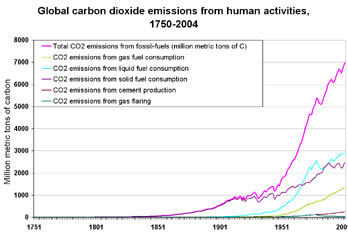
At The Guardian, George Monbiot, dealt with the issue of climate change denial in his Dec. 9 column. He did a nice job of debunking some of the prominent deniers. Monbiot's column and the predicted responses also provided a good illustration of how reciting facts such as those illustrated in the following graphs have little practical impact on the political process. His suggestion is that changing the way we talk about the issue and shifting the focus to broader community concerns will be a more effective strategy. That seems a line of thought that is consistent with the U.S. election outcome.


Global Warming


The Rate of Change


CO2 Emissions


Arctic Sea Ice Loss


Species Extinction

Sunday, December 07, 2008

This morning in the bosque


Saturday, December 06, 2008

You can't get there from here...


We visited the Portland Art Museum recently to take in a photography exhibit, Wild Beauty: Photographs of the Columbia River Gorge, 1867-1957. Too many pictures in too many rooms on two floors, but I did finally realize the importance of Carleton Watkins whose work I had only previously given a passing glance. I had lumped Watkins in with a lot of other early scenic photographers that churned out postcard material in the 19th Century. That was quite an error, as it turns out that Watkins is one of the all-time greats in photography.

Watkins produced his most important work on either side of the Civil War in Western locales, including Yosemite and along the Columbia River. In spite of the fact that he seems not to have had any formal art training, Watkins' compositions are masterful. Understanding that is impossible, however, if you only can view the photos on line, or even in good reproductions. The problem is that the detail and tonal nuances captured on his negatives simply must be viewed close-up with actual prints to be appreciated. Watkins made some great stereo images, but his real masterpieces were produced with a mamouth, custom-made view camera yielding 18 x 22-inch glass plate negatives from which contact prints were made.

The visit to the museum was for me a good reminder of how much superlative work was done so very early in the history of photography, as well as the fact that all the ingenious technological innovation of the following century has not produced photographic art that surpasses those early efforts. Vision, determination - and big negatives - still trump everything else.

Thursday, December 04, 2008

Xmas


Over the years I got progressively disenchanted with Christmas: the commercialization, the crowds, the agonizing over what would be appropriate as a gift. The last time I bought Christmas presents was about fifteen Christmases ago; I picked up a hand-full of cheap plastic ballpoints and put name tags on them for the people that would be showing up for the celebration.

Of course, that doesn't rule out buying presents for myself. This year, I treated myself to the Mini Microlite Mylar Kite - $1.99 from Hobby Lobby. I'm a sucker for airplanes, kites, and miniaturization, so there was no way I was going to get by that display. Also, I do fit into the recommended age range of "5 to Adult", though I'm probably closer to the beginning than the end of that spectrum, appearances notwithstanding.

Wednesday, December 03, 2008

Oregon


Zeiss Ikon Ikonta A 520

Tuesday, December 02, 2008

Maritime


More from the Everett Marina north of Seattle. The Makah is a steel-hulled scow out of Tacoma used for harbor dredging.

Saturday, November 29, 2008

Portland


Thursday, November 27, 2008

Thanksgiving in Portland


Monday, November 24, 2008

From the Pacific Northwest


Wednesday, November 19, 2008

A Field Guide to the Plants and Animals of the Middle Rio Grande Bosque

Jean-Luc E. Cartron, David C. Lightfoot, Jane E. Mygatt,
Sandra L. Brantley, and Timothy K. Lowrey

Including over 800 color photos, this authoritative guide is the first of its kind for the Middle Rio Grande Bosque.

We enjoyed a presentation this morning by the authors. It looks like a great guide to our near-by bosque.

Sunday, November 16, 2008

UNM


FED-1g

Friday, November 14, 2008

Margaret


This image is from my Zeiss Ikon Box Tengor, Model 54/2, which was made in Germany between 1934 and 1938.