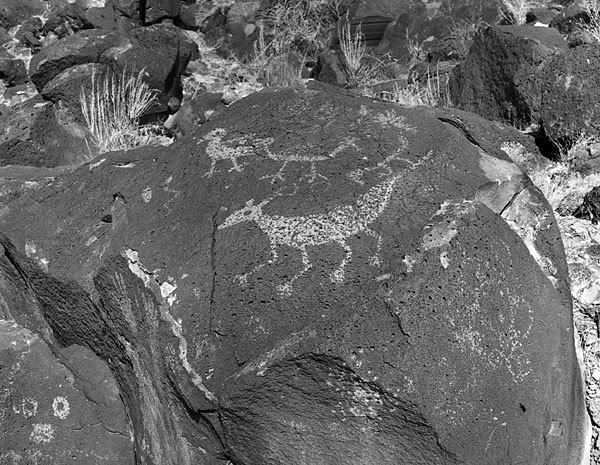
 We took a walk through the Piedras Marcadas section of the National Petroglyph Monmument at the western edge of Albuquerque. The Rio Grande-style petroglyphs are magnificent.
Wednesday, February 27, 2008


Tuesday, February 26, 2008
 I discovered that some of my recent work could not be properly viewed with the Opera browser. I've corrected that, so the Rinconada rock art photos, the cyanotypes and the cats should all now be available for users of Firefox, MSIE and Opera.
I've been pleased with the results I'm getting from the combination of TMAX 400 film and a couple of my old cameras, the Kodak Reflex II and the Ikonta 520. They do a particularly nice job of rendering the tones and textures of my rock art subjects. I hope to have some more available soon from those cameras showing some of the extraordinary images from the Piedras Marcadas site.
Monday, February 18, 2008
 There is a lot to see and do in and around Albuquerque. One can be a perpetual tourist here. A recent outing took us to the National Petroglyph Monument just west of town.
Wednesday, January 23, 2008


 Moved in.
Most of the boxes are finally unpacked, and everyone is pretty comfortable in the new place. Richard and Rio spend a lot of time at the windows keeping tabs on the local free-range wildlife. Along with the house, we got a mother cat and two kittens who live in the garage; they seem to be adapting to the new tenants.
Sunday, December 16, 2007
Thursday, October 11, 2007
Moving On
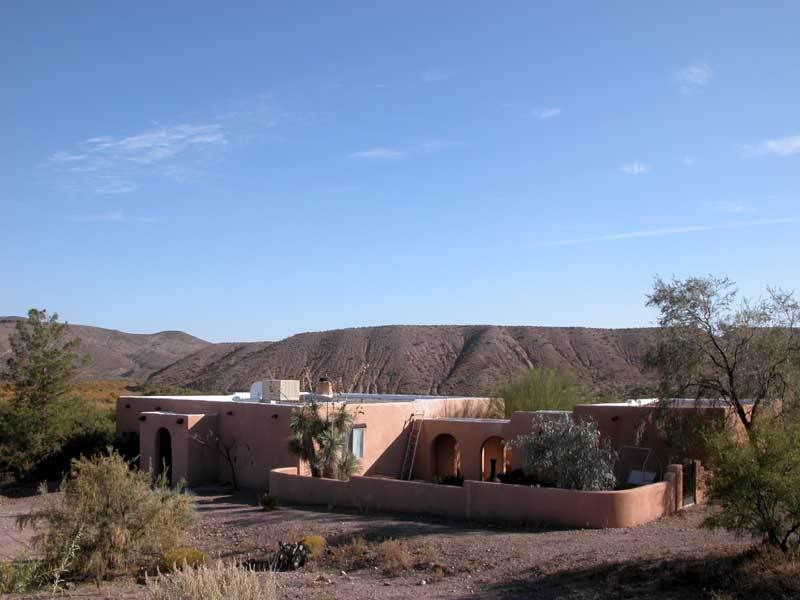
With Margaret's recovery progressing, I am spending more time cleaning up the house in preparation for selling it. We are looking to move back to city life, but have yet to decide on a specific location. I have added a property description page to the web site. I'll post some of the pictures of the place I have made over the 13 years we have lived in it, and I'll try to add some new ones, including some panoramas, to give a better idea of what it looks like.


Wednesday, August 29, 2007
Special

Thursday, July 19, 2007
When I get up in the morning there are usually several dozen white-wing doves perched on the bushes around the house waiting for the daily birdseed dole. I can also hear them walking around on the roof, and there are often a few perched around the rim of the big skylight in the atrium. Today was the first time I've seen them actually walking around on the plastic dome surface.


Friday, July 13, 2007

Tuesday, July 10, 2007

Tuesday, July 03, 2007

Monday, July 02, 2007
Competition
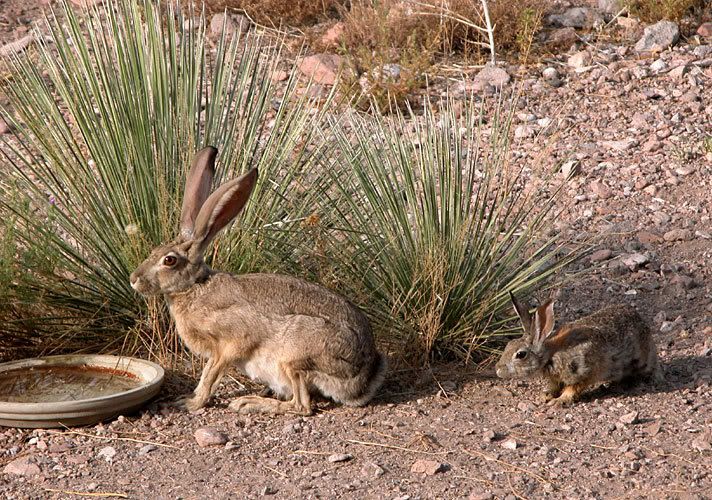
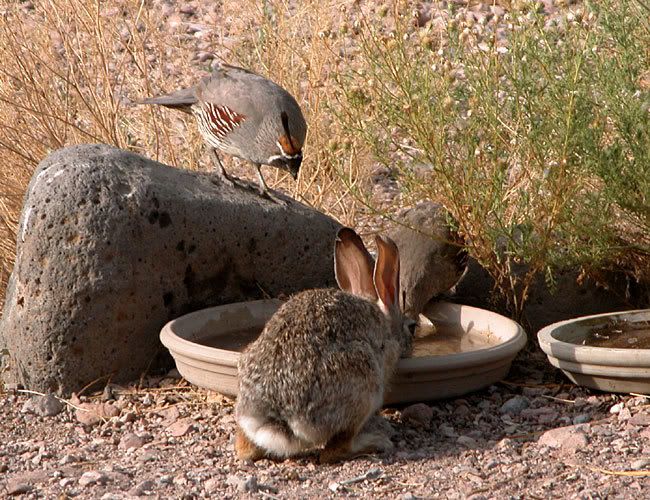
The Desert cottontails are regular daily visitors at our water dishes. The Black-tailed Jackrabbits only show up when daytime highs approach the 100-degree mark. Though the two species show many similarities, they are not so closely related, and their features are more the result of convergence driven by similar environmental challenges.
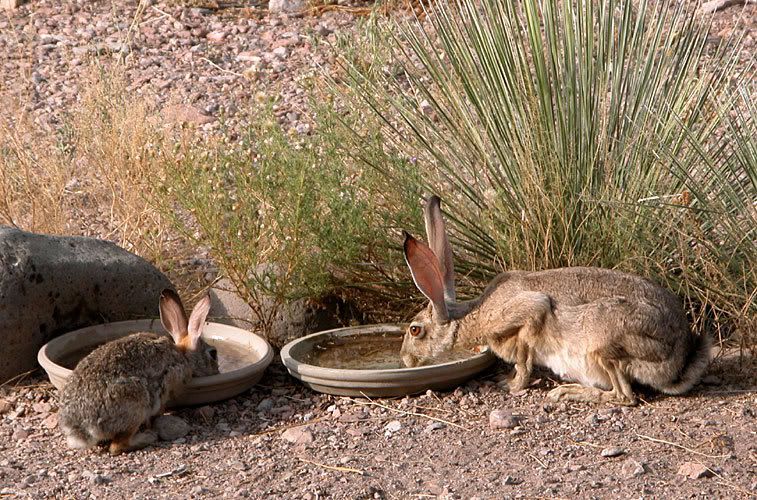
The little cottontails are much more assertive than their bigger cousins. They are not reluctant to muscle their way through crowds of doves and quail which have come for the morning feeding. If there is a cottontail already drinking from a single water dish, the jackrabbits will wait patiently until the cottontail finishes -- that can be five or ten minutes sometimes, as neither are very efficient drinkers.
Having two dishes with water considerably reduces competition, but the appearance of a pair of thirsty Gambel's Quail proved too much for the jack.


Saturday, June 30, 2007


Thursday, June 28, 2007
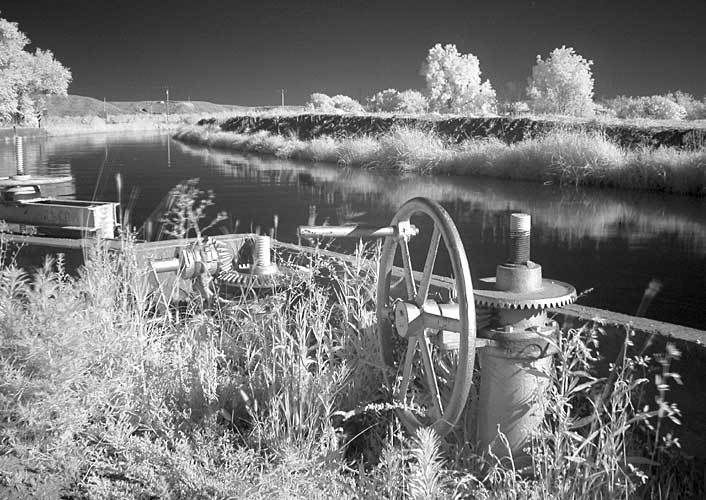
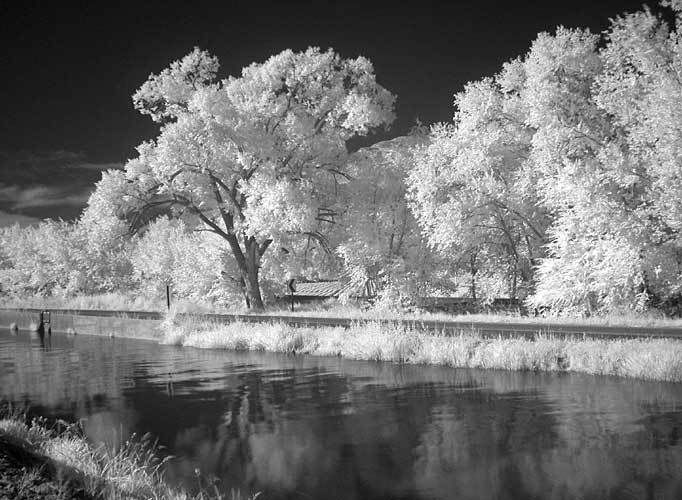
I have added a couple more images to my infrared folder. They were taken this morning at the flood gate on the irrigation canal near Ft. Selden.


Monday, June 18, 2007


Thursday, June 14, 2007
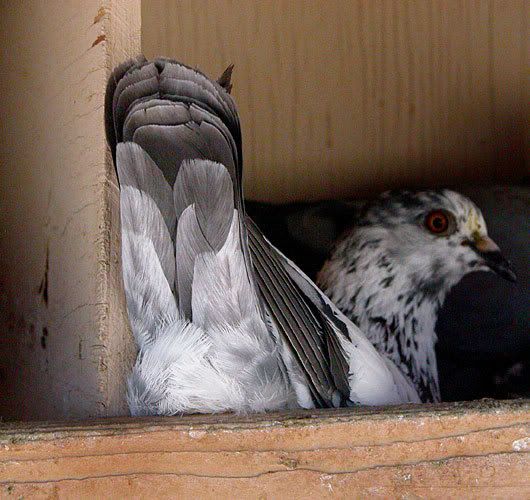
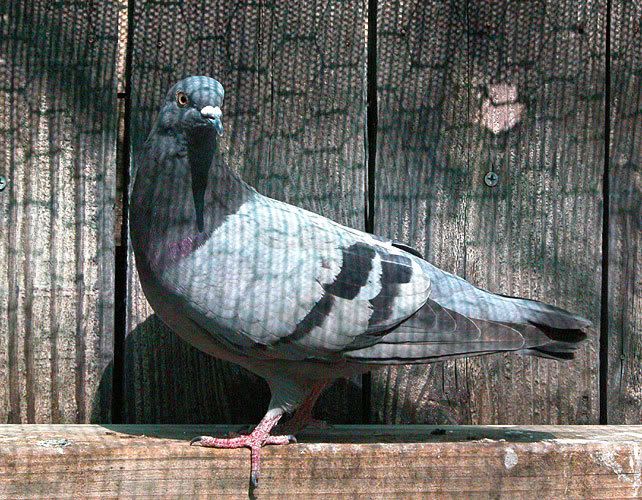
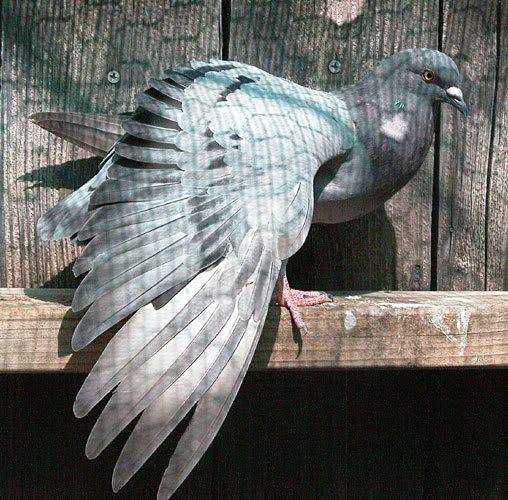
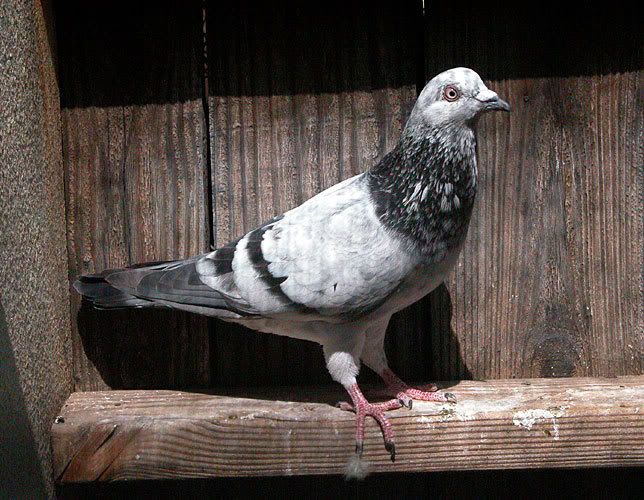
Tipplers
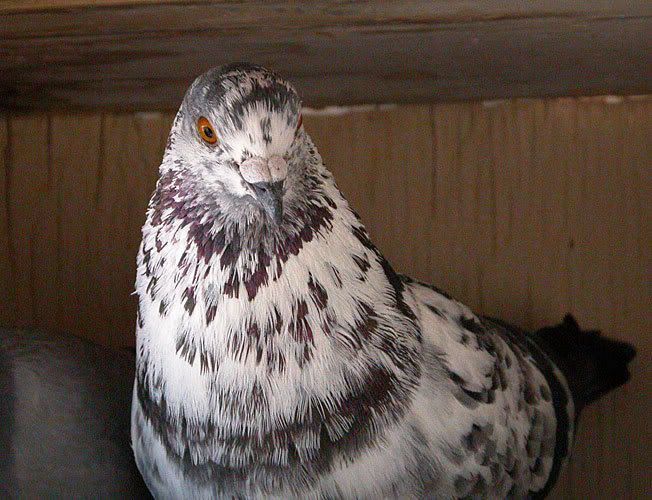
My pigeons are a breed known as Tipplers; they are endurance flyers, able to remain in the air for many hours. When released from the loft, the flock circles upward, sometimes reaching a height which nearly takes them out of sight. While the pigeons often fly in a circle which may be several miles across, the center remains over their home loft. A clear day with a slight breeze is the most conducive to high, long flights. When the wind blows strongly, the Tipplers will remain at low altitude, skimming close over the mesquite and creosote bush which surrounds our property at great speed. Perhaps they are afraid of being blown too far from home, and they usually will soon flutter back to the loft roof on such windy days.


Tuesday, June 12, 2007





Saturday, June 09, 2007
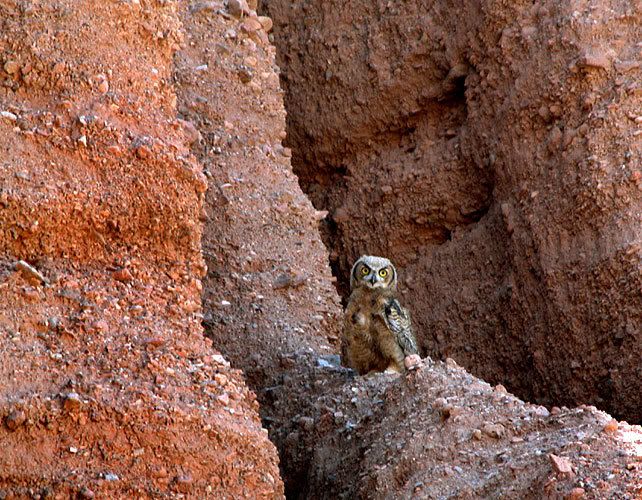
As we were getting ready to go into town on Thursday, I noticed a movement on the cliffs south of our house. Through the binoculars, it looked like a bird sitting in the shadows. I set up the spotting scope the next day and found the bird in the same place.
I had watched the same place for several weeks at the beginning of the Horned Owl nesting season in March. I never saw more than one adult when I visited the place, and I finally gave up, assuming that they had not nested there this year. Yesterday, two grown young flew out when I approached the site, while the mother sat nervously by. The male also showed up briefly, then he and the two babies flew off around the corner. The female just moved a little higher on the cliff face where she could keep an eye on me.




Friday, June 08, 2007
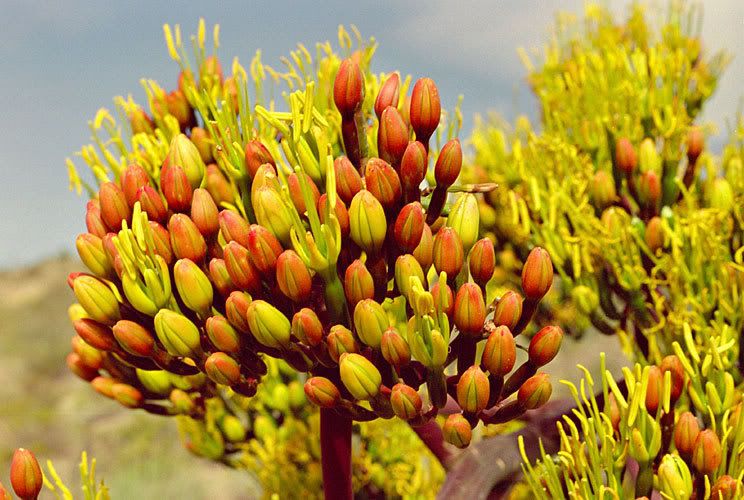
On Wednesday I drove ten miles east of Hatch to the site of an old mine at the base of the mountains. I climbed to the top of the high ridge above the mine with the wind seeming to get stronger with each step. By the time I reached the ridge crest, the air was a river-like torrent moving at close to 50 mph. Going over to the east side of the ridge got me out of the worst of the wind.
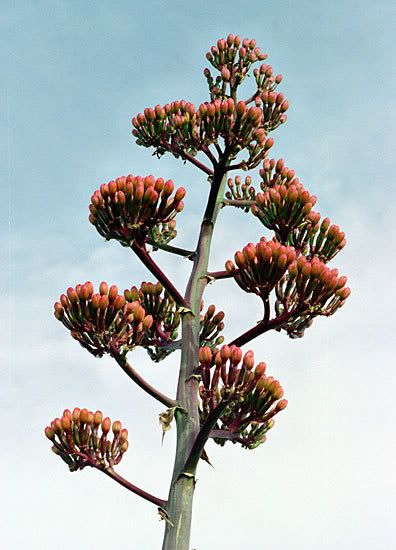
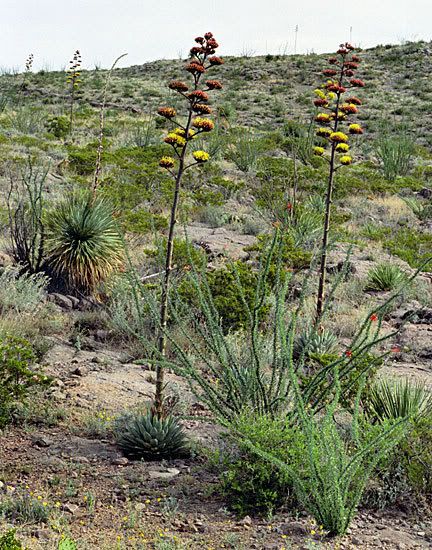
I don't recall seeing so many flowering agave before. I think they take ten or twelve years to mature; the plant flowers just once, and then dies. As soon as the pink buds begin to appear on the twelve-foot flower stalk, the agave leaves begin to shrivel and lose color. By the time the fruits have matured, the plant will be brittle and brown.





Sunday, June 03, 2007
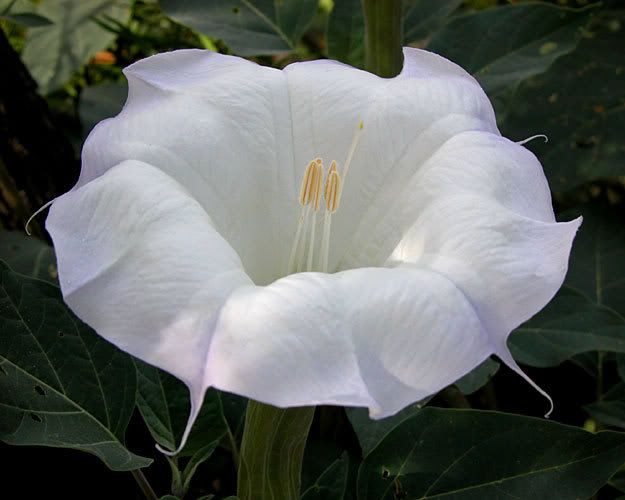
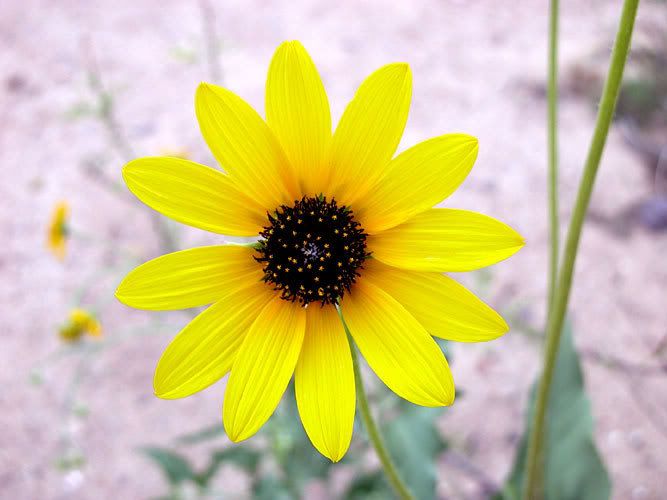
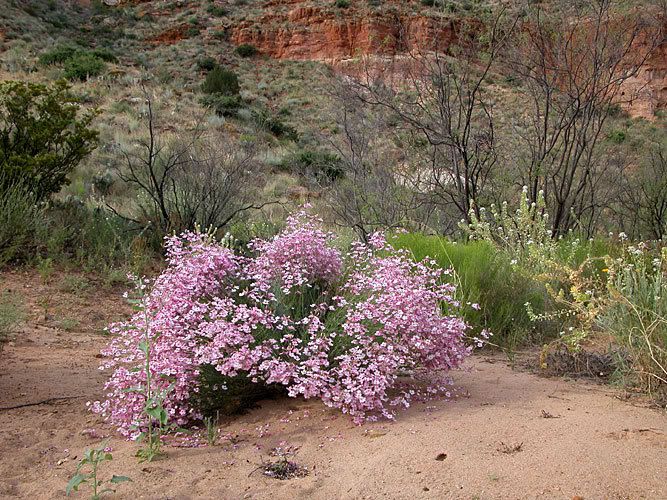
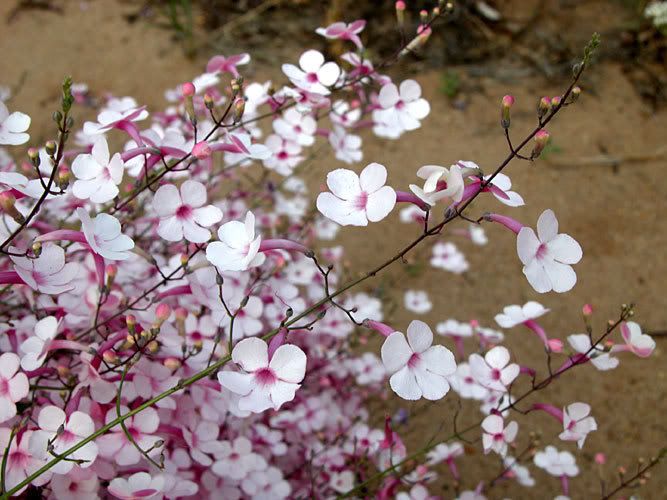
Some flowers from the falcon's aerie: Datura, Sunflower, and ???
***
Thanks to Katherine Blackett we now know that the pink flowers are Penstemon ambiguus, also known as Sand Penstemon or Moth Penstemon. The mystery now is why we didn't notice such a showy flowering plant before since it seems to grow everywhere in New Mexico.


Subscribe to:
Posts (Atom)