Showing posts with label Kodak Brownie Reflex. Show all posts

Thursday, February 24, 2022

In the Neighborhood with the Kodak Brownie Reflex

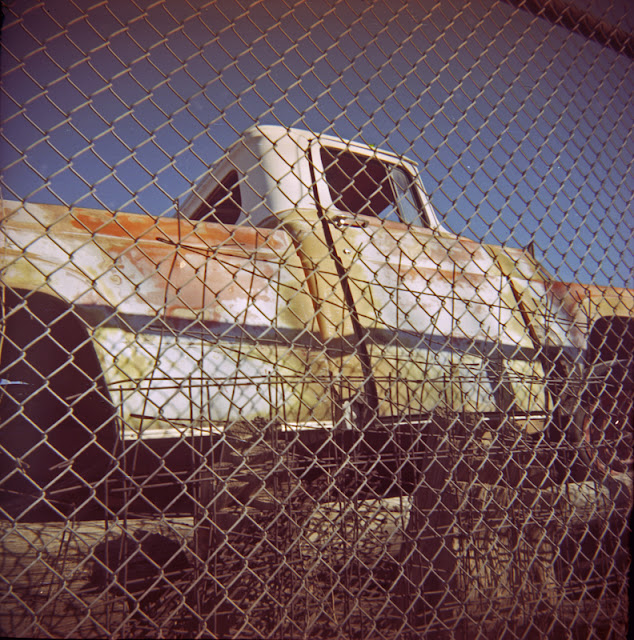
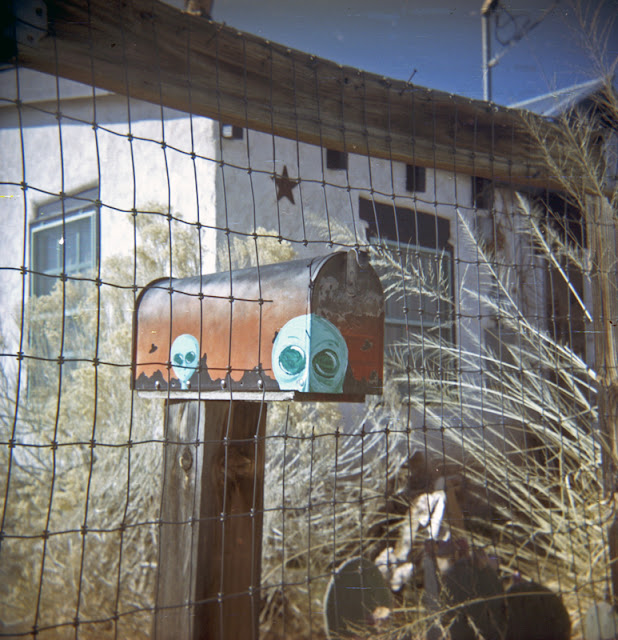
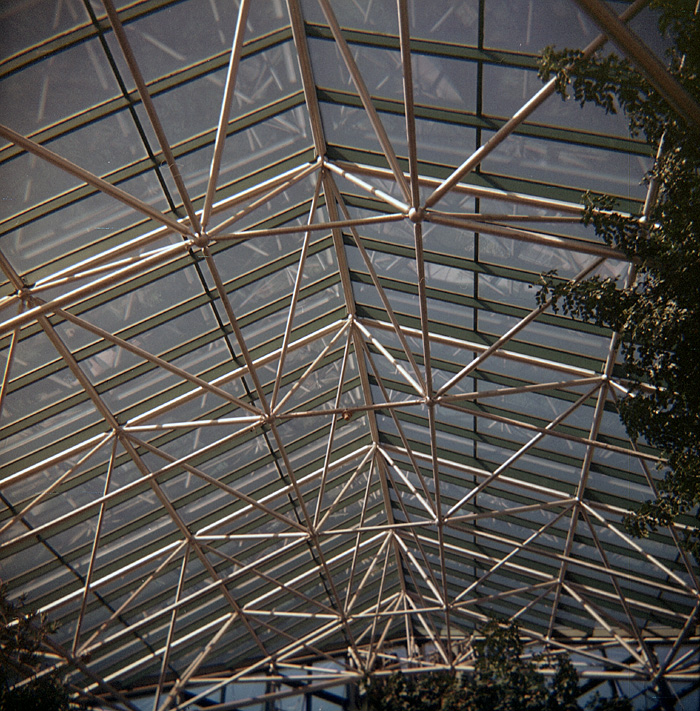
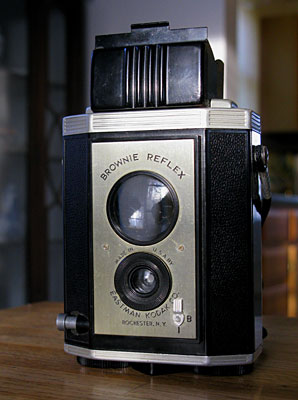
 The compact size and brilliant viewfinder of the Kodak Brownie Reflex make it one of my favorite cameras using 127 film.  I still have most of a refrigerated bulk roll of 127 Portra 160 , so I wound up a couple two-foot lengths of the film on 127 reels along with some old 127 backing paper.  The Portra would have given me over-exposed images in a box camera when new, but the film is well-expired and seems about right for the slow shutter in the little reflex box.


The fixed-focus lens produces sharp results from about five feet to infinity.  However, the camera will accept the same Kodak No.13 accessory close-up lens which is used with the Hawkeye Flash, and that gets you as close as three feet.


Wednesday, June 21, 2017

Brownie Color

I shot the second roll of Konica 160 in my Kodak Brownie Reflex.  This was the first opportunity I have had to shoot color in the little 127 box camera, and I was quite pleased with results obtained from the expired film which seemed a good fit with the camera.  My judgment in this regard may be a bit clouded by sentimentality; the Brownie Reflex was produced in the year of my birth.




The elegant little Brownie Reflex was in production from 1940 to 1941. In 1942 Kodak added a capability to use flash in the succeeding "Synchro" model; that became one of the company's longest lived cameras, being produced in Great Britain until 1960. The camera's compactness was owed to its use of the 4cm-square 127 roll film format. The unique style is attributable in part to the fact that the inventor, Henry O. Drotning, came to Kodak with a background in designing mechanical music toys. Drotning filed his patent for the Brownie Reflex early in 1940, making it one the early roll film designs featuring a large and brilliant reflective viewfinder which would become very prevalent in the post-war years. (The British Ensign Ful-Vue came along slightly earlier in 1939, but the first was probably the Voigtländer Brillant in 1932.)


The non-flash model of the Brownie Reflex is uncommon. I was pleased to find myself on ebay as the only bidder on one, and I got it for just five dollars. The camera's exterior had only small blemishes from use. Inside, however, I discovered that the bakelite film carrier had broken away from the base. Someone, many years previously, had repaired the damage quite carefully with glue and cellophane tape. However, the tape and glue were yellow and brittle, and no longer held the parts together. I cleaned up the break, glued the parts together and added a bead of JB Weld all around the seam. Dismantling the camera was uncomplicated and enabled cleaning of the optics and the simple shutter.

The manual for the Kodak Brownie Reflex is available at the Butkus site.

Saturday, May 01, 2010

Sutro Baths


I took five film cameras on a ten day trip to San Francisco. That was apparently two too many, as I only managed to shoot with three of them.


First up was the little Brownie Reflex which has an uncanny capacity to select what is important in a scene and reject the rest. Since that is what photography is all about, I think my liking for the camera is understandable. I haven't quite yet figured out what the mechanism of selection is in detail.


I was sorry I had only one roll of 127-format Efke 100 to take on the trip. It is a nice film, though the emulsion seems a bit fragile.


We made several visits to the beaches, but only one hike down into Sutro Baths.


We managed to visit all our favorite places in the city, and even explored some new ones.


We always spend the first couple days scheming how we might move back to San Francisco. After that, reality sets in and we admit that it is an impractical idea.

Friday, April 16, 2010

Greatest Generation Camera

My Kodak Brownie Reflex seemed to be the appropriate camera to document the recent visit of the Collings Foundation planes to Albuquerque. The design dates from 1940.


I was pleased with the results from the 127-format Efke R100 film which I got from B&H.


The rest of the images from the roll are included in a page about the camera which I have added to my vintage cameras site.


I'll post some digital images from the same event on my Flights of Fancy blog.