Showing posts with label Kodak Retina IIc. Show all posts

Wednesday, November 30, 2022

Old Dog, New Trick

 Over the years since I got back to shooting film I have enjoyed opportunities to explore the possibilities of many different film and developer combinations.  The soaring prices of most films have made that an expensive proposition and have prompted me to look at alternatives.  One obvious one to consider was bulk film.

I don't recall when or why I acquired this Watson Bulk Film Loader, but it seemed time to give it a try.  I mentioned the possibility to a couple film shooting friends and was offered some helpful advice on use as well as a partial bulk roll of Arista Edu 200 to get started.  I bought a four-pack of plastic reloadable cartridges from Adorama and loaded 12 frames into one for a trial run.  To eliminate any camera variables in the test, I shot the short strip in my Retina IIc with the Xenon lens which never disappoints.
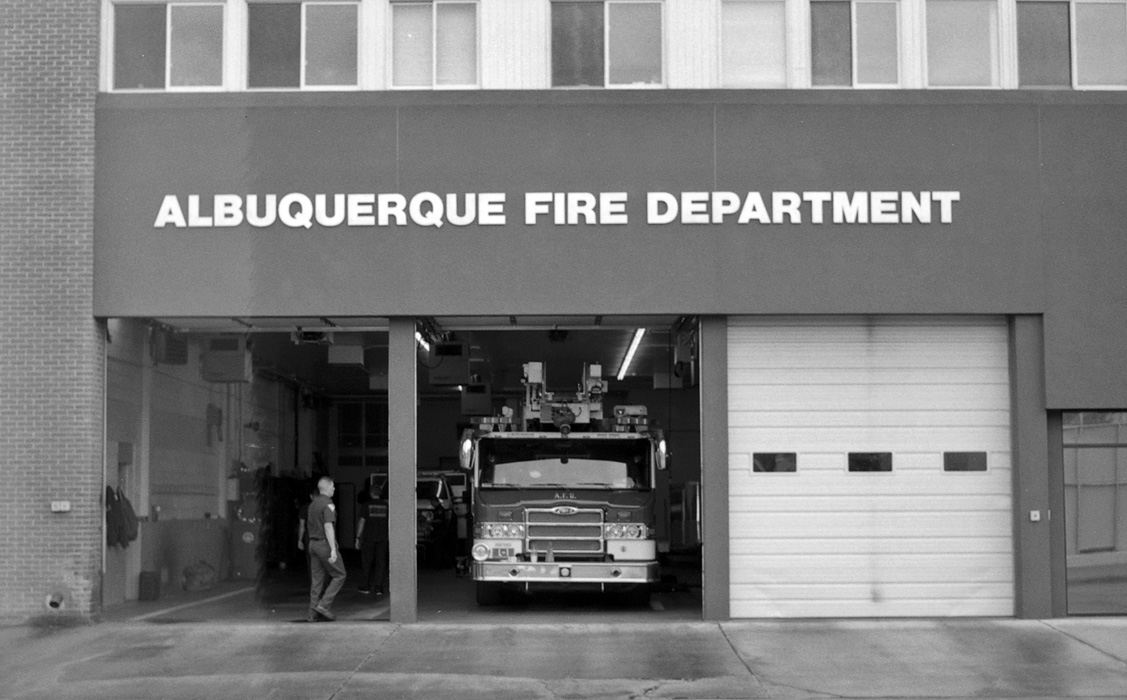
I took a long walk with the Retina through a part of the neighborhood I seldom visit.  The setting sun cast some nice light and shadows which made it easy to quickly finish the test roll.

I had not used any Arista film in some time and I was pleasantly surprised at the nice tonal palette and fine grain when developed in RO9 1:25.

So, I ordered a 100-foot bulk roll of Arista Edu 200 from B&H.  The hundred-foot roll of film costs $68 and yields about 18 36-exposure rolls; so around $3.77 per roll.  That is a nice savings over the individual 36-exposure cartridges at $5.99 each, as well as some inflation protection for the duration of the bulk roll.

Tuesday, September 04, 2018

Downtown


All five of my Kodak Retina cameras are post-war models that have excellent lenses.  The IIc is looks nearly new and works very well.  The others show more wear, but are still very capable shooters.  My goal is to spend some time with each of them over the next month.

Tuesday, March 20, 2018

Xenon

Schneider Xenon
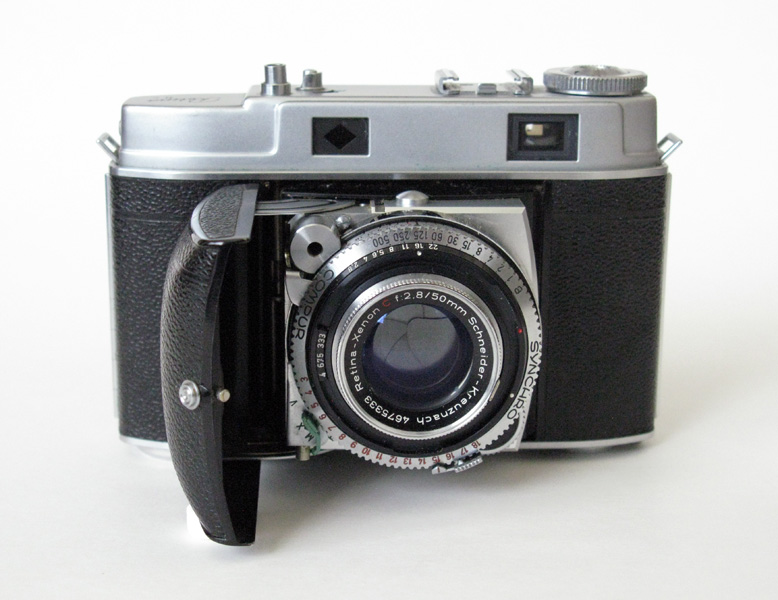
I decided to continue my exploration of the faster lenses that started showing up in the late 1930s by shooting my post-war Retina IIc.  The IIc has a very sharp and nicely coated six-element Xenon which makes excellent images.  The camera incorporates many design innovations that set a pattern for future developments, but also included some features that today seem more novel than useful.  The placement of the advance lever on the bottom of the camera seems awkward to me, as does the coupling of the aperture and speed controls.  The shroud around the bellows helped to avoid light leaks, but the side-opening front door just about rules out one-hand shooting.  One does get used to those features with use, however.  My own example looks almost new and works very well, though the viewfinder would probably benefit from a little cleaning.

Curiously, the IIc on the lower left below has a maximum aperture of f2.8 while the earlier II and IIa models and the later Retina Reflex all offer an f2 maximum f-stop.

Putting the cameras head to head clearly indicates that the lenses are the same in all four cameras, so it is not obvious why the IIc lens was limited to the f2.8 aperture.  A possible answer may be found in the need to fit the Xenon into the rather small housing of the IIc's Synchro-Compur shutter.  It is possible that the interchangeable front lens group had something to do with the restriction also, but the slr has an identical removable front mount and retains the f2 maximum.   At this point it seems that only the ghosts of Kodak know the real answer. 


My opinion is that the Xenon lenses on the Retinas were as good as anything being made in their time, as was the general design and construction of the whole camera line.  Kodak continued for a couple decades to develop the Retina cameras, incorporating additional innovations including coupled light metering.  However, the improvements were quickly matched by Japanese makers who were also ultimately able to attain an insuperable lead in price competitiveness.


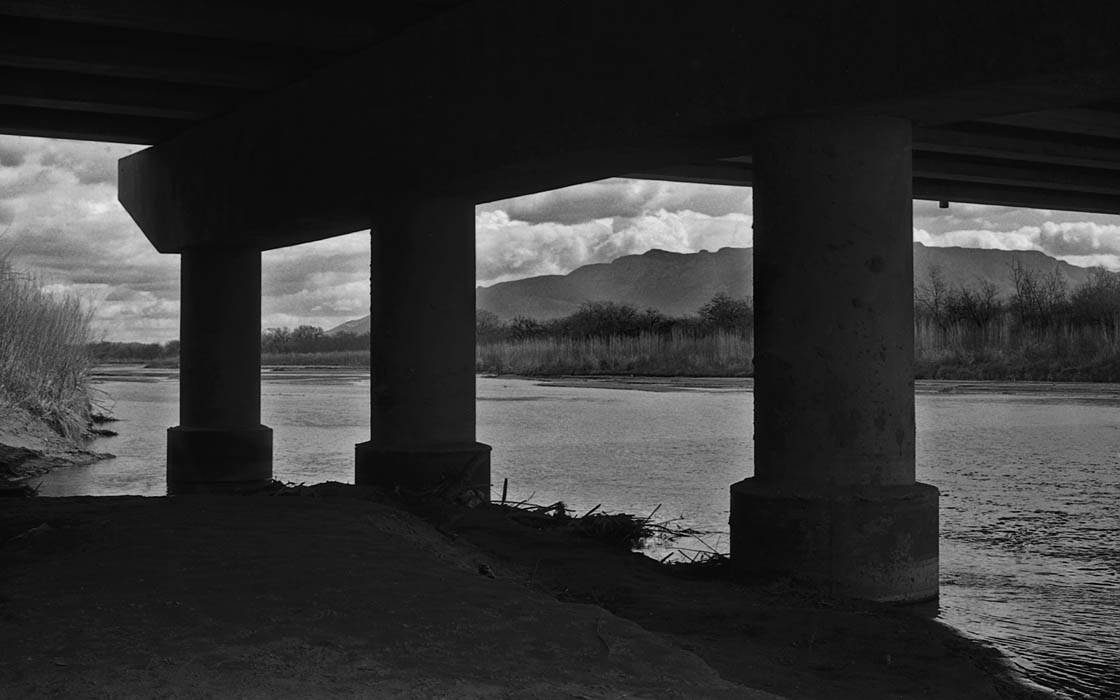
I have seldom posted landscape images on the blog.  My excuse has always been that I am just not good at seeing the compositional possibilities of the broad view. That is probably not true, though.  I likely have just as much (or as little) talent for landscape as other forms, but I just haven't made an effort in the past to come to grips with the challenge.  So, my plan is to start devoting a few frames of every roll of film to landscapes to see if I can develop some actual practical skills.

And, lastly, a goodbye to my loyal friend, Rio, who patiently endured many photo sessions, including this one with a Retina Reflex.

Thursday, August 25, 2016

Kodak Retina IIc (Type 020)

Prior to the appearance of the Retina IIc, the Retina family of cameras looked more to the past for design inspiration, incorporating the best of what went before, but not really breaking much new ground. The IIc is still clearly a member of the family, but it has many design innovations which point to future developments.

The Retina IIc features a more rounded, streamlined appearance, the outside finish is greatly superior to earlier models, and all the moving parts have a feel of solidity and precision. The bigger and brighter viewing system has a brightline frame. The biggest change is not evident in the appearance, but becomes immediately obvious in use; the quiet Synchro Compur shutter has dispensed with the stiff little pre-tensioning spring which made shutter speed setting a little awkward in older models. As a result, the photogapher will be much more willing to leave the shutter at the 1/500 setting, even in the cocked state, for prolonged periods.

In spite of obvious enhancements in materials and design, the IIc probably did not seem like a step forward in some respects to users of earlier models. The IIc is a little bigger and heavier, and does not slip so comfortably into the pocket as its predecessors. The rangefinder, though probably more reliable and precise, now lacks parallax correction. The EV system, which couples shutter and aperture settings, seems like a real design error, though it was one that many other manufacturers indulged around the same time. The speed/f-stop settings can be uncoupled by slightly depressing the aperture lever, but this does slow the shooting process a bit.

Minor complaints aside, the Retina IIc is a pleasure to shoot, and the f2.8 Xenon lens is every bit as sharp as the faster f2 lens on the older models. The bottom-mounted film advance lever is fast and smooth in operation. The solid feel of the camera and the responsiveness of the controls inspire confidence for capturing any kind of subect under any conditions. Beyond those practical considerations, the IIc design also provides a glimpse back into the critical transitionary period after WWII when the world began to rebound from the ravages of the war to embrace a new vision of modernity.

Some pictures from the Retina IIc:


Sunday, March 13, 2011

twofer


This Sunday Slideshow comes in two parts: one black & white, and one in color. These two groups of picture represent just about all the shooting I've done with the Retina IIc.

Sunday, January 02, 2011

On the Border


Living in southern New Mexico there wasn't much opportunity for street photography. When I felt the need for some of that, I would drive to El Paso and wander around with one of my old cameras. Most of the pictures in this 2003 gallery were made with a Kodak Retina II. The camera's shutter had kind of a weak mainspring, but it worked ok at 1/500, which was fine for hip shots. The f2/50mm Xenon lens may be the best of any in my collection.

Sunday, March 21, 2010

not dead yet

Distant cousins. They live in the same neighborhood but never meet.


I haven't put much up here lately due to being preoccupied with getting under way with a new blog, Flights of Fancy. I'm having fun with it, though I may be the only one.

Haven't given up on photography and old cameras. I have partially-shot rolls of film in the C330 and the mju. Also took delivery recently of a pretty little five-dollar box camera that uses 127 film.

I found yet another Vivitar Ultrawide and Slim at the local thrift store in pristine condition. It is on its way to the talented photo blogger, Sarah Regnier.