Showing posts with label Nikon F. Show all posts

Thursday, June 12, 2025

Spring Bloom


The yearly spectacle of blooming Yerba Mansa along the Rio Grande is something I always look forward to  It came along right on schedule this year at the beginning of June following some nice Spring rains.

Last year a little patch of Yerba Mansa I planted in our yard bloomed at the same time as those in the riverside forest.  That planting is spreading and looks healthy, but this year there are no blooms, or even buds. I'm wondering now if the lack of blooms is related to the fact that the plant is genetically incapable of self pollination. Perhaps I just need to provide a companion that is not directly related to my planting

There is some doubt about the origin of the plant's common name.  Yerba Mansa literally translated means Tame Herb, but what that might refer to is not obvious. An alternate name, Dragon Tail, would seem to be derived from the conical structure which bears the tiny flowers.

Yerba Mansa was used for medicinal purposes by all the indigenous people in the plant's western habitats. It would be interesting to know what names it was known by among  those people.

Sunday, July 23, 2023

Verde que te quiero verde.


Verde viento. Verdes ramas.
El barco sobre la mar
y el caballo en la montaña.
Con la sombra en la cintura
ella sueña en su baranda,
verde carne, pelo verde,
con ojos de fría plata.
Verde que te quiero verde.
Bajo la luna gitana,
las cosas la están mirando
y ella no puede mirarlas.


Romance Sonámbulo
Federico García Lorca (1928)

Tuesday, May 02, 2023

May Daze

 Got out a bit this week with the Nikon F.


Sunday, February 05, 2023

Hunting for Rock Art

 I went with a friend to visit the south end of the Petroglyph National Monument west of Albuquerque.  We were disappointed to find that the entire length of the east-facing slope is now blocked with a strand of steel cable and signs saying the area is closed to allow restoration of the vegetation.  That will likely reduce some foot traffic in the area, but does not offer any protection from vandalism as one can simply step over the wire.

Nevertheless, we honored the signs and stayed on the right side of the fence for the mile or two past the rock art panels.  I didn't want to return on the same path, so suggested we climb the slope past the end of the barrier and walk back along the canyon rim.  I was pleased to actually accomplish that given my rather poor mobility, and even more pleased to find a fine example of rock art along the rim consisting of the common concentric circles design accompanied by a turtle.  That made what had tuned into a five mile hike seem worthwhile.

We descended from the mesa down the gentler west slope to get back to my truck.  About half way down we came across this interesting rippled volcanic pavement that was laid down about 150,000 years ago by oozing eruptions along the Rio Grande Rift.

I felt unfatigued the next day and, suspecting I had not gotten any good quality images due in part to the excessive brightness of the noonday sun, I loaded the dog in the truck early in the morning and drove back to the mesa.  I returned to the mesa top along the easy west slope and was looking out atop the rimrock toward the mountains in about half an hour.

Turning north to follow the rim to the site of the petroglyph panel,  I stepped on a rock about knee height and suddenly felt the achilles tendon in my left leg stretch to the breaking point.  I ended up about ten feet downslope on my back.  My pinhole camera and the tripod were back where I had fallen. The Nikon F was still on its strap around my neck; I did not discover until later that the camera's rewind lever had snapped off.

Lying on my back and looking up at the blue New Mexico sky my first thought, of course, was to wonder if I would be crawling the mile back to the truck.  I was unable to flex my left foot, but I did manage to get myself into a standing position.  I found that I could walk -- very slowly -- by keeping the left foot flat.  I did have to scoot on my butt down one rocky slope to the sandy arroyo that parallels the west face of the mesa. Soon after we reached the arroyo a coyote started barking at me and the dog; it sounded a lot like laughter.

I think we reached the truck in about an hour.  Working the clutch was quite a challenge, but we made it home safely.  I ordered a replacement rewind lever from ebay for the Nikon F.  The leg will likely need some expert attention before I can get back to reshoot that rock art.

Monday, January 30, 2023

Selective Focus

I decided recently that I have not given adequate attention to the possibilities offered by selective focus.  The main components of that technique to restrict depth of focus are lens focal length and aperture.  With that in mind I mounted the  Nikkor-P Auto f:2.5/105mm on my Nikon F loaded with a roll of Arista Ultra Edu 100.  I shot most of the roll at 1/1000 which allowed a wide aperture even in the bright New Mexico sunlight.


I cannot recall ever feeling the need to use very high shutter speeds for the purpose of stopping motion blur.  What this experience has shown me, however, is that 1/1000 or higher along with the associated wide apertures can offer much better control over the separation of foreground and background and better emphasis of the primary compositional interest. Of course it is also important to pay attention to the capacity of the lens being used to perform at wide apertures.

Tuesday, November 22, 2022

Following The Cranes

 The cranes at the river have mostly been beyond the reach of my longest lenses.  This morning I went a few miles north to the Los Poblanos Open Space where it is often possible to get closer to the birds.

I have had mostly poor results from the Vivitar Zoom I have been using with the Nikon F.  I may go back to the Open Space with my Pentax and the Yashinon zoom.

Thursday, November 17, 2022

At The River With The Nikon F

 Cool Fall weather has brought the Sandhill Cranes back to the Rio Grande Valley.  I've taken a couple long walks along the river to photograph them with my Nikon F and the Vivitar 70-210 Macro Focusing Zoom.


The Vivitar lens seems a versatile performer, though I found it challenging to get it well focused at maximum extension.  I think I likely just need more practice using it.

Sunday, October 23, 2022

Autumn Comes to the River

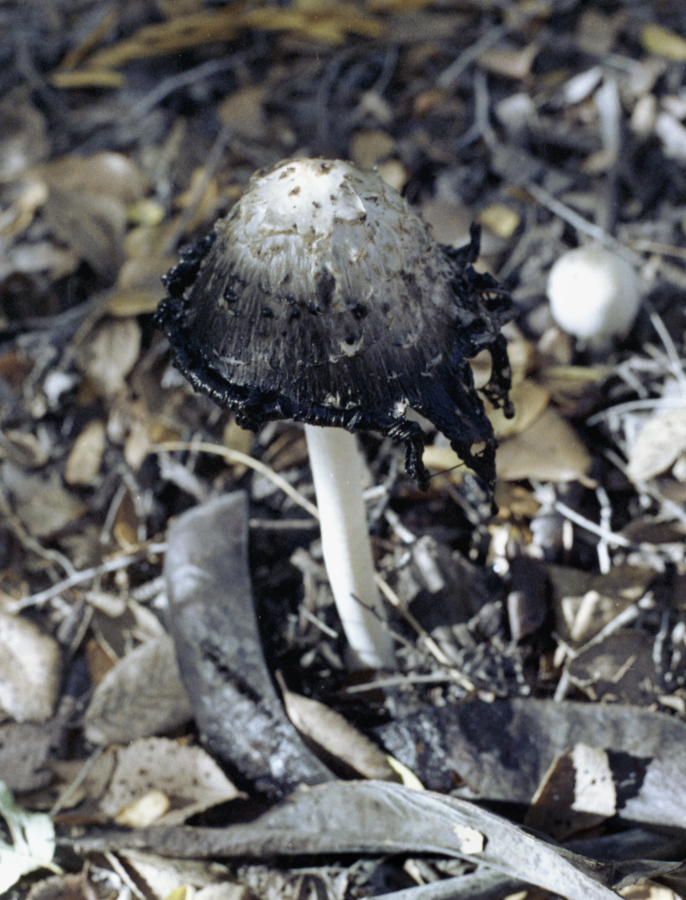
 Late summer rain caused a burst of growth in the riverside forest and cooler weather has brought some color to the foliage.  Trails beside the river are muddy and there are big white mushrooms growing everywhere -- something I had not seen here before.


I shot a roll of expired Fuji 400 at 200 in my Nikon F with the Nikkor 1.8/50mm lens.  This was the 12th roll through my current Cinestill C-41 kit.  I developed for seven minutes at 95 degrees.

I heard a few Sandhill Cranes during my walk, so I'll get back to the river soon to try for some pictures of them.  I managed to clean the fungus off the front elements in a Vivitar 70-210 zoom which was given to me some time ago, and am looking forward to seeing how that performs.

Saturday, October 01, 2022

Fall Outing

 I had a nice bike ride with my Nikon F.  Went to the Botanical Garden and Los Poblanos.


I'm still working my way through my stash of expired film.  I did actually buy some 120 Fomapan, so will do something with medium format soon.

Tuesday, June 08, 2021

Yerba Mansa

 Summer along the middle Rio Grande is announced by the blooming of the Yerba Mansa.  This year the season started a little early, probably thanks to warm temperatures and some welcome rains.

The dense patches of fleshy green leaves blanket acres of the boggy cottonwood forest floor.  The plants do well in the deep shade, but the blossoms are thickest where a bit of direct sunlight reaches them during the day.


The seed forming flowers are actually the small petals clustered on the central cone structure.  The likely function of the showy white bracts is to attract sphinx moths and other night-roaming pollinators.  In addition to the production of copious amounts of seeds, the plants also spread with dense mats of runners near the soil surface.


While the towering cottonwoods are dominant, they share the space with many other shade-tolerant species including Mulberries, Russian Olive, and Wolf Berries.


These first pictures of the year were made with my Nikon F on TMAX 400 film.  I look forward to visiting the Yerba Mansa several more times as they mature during the summer with other cameras.  I am  also pleased to see that the small Yerba Mansa which I planted a couple years ago beside the house look like they might finally produce a few flowers.

(See: The Yerba Mansa Project)

Ignore this pic.  It is for another post elsewhere.


Tuesday, March 02, 2021

The Spiralite Proxivar

I don't recall when, where or why I acquired this Spiralite Custom Proxivar.  I'm sure the accessory close-up lens did not fit on anything I had at the time.  I came across it in a box recently and realized the Proxivar would screw onto my Nikkor lenses.


The instruction sheet in the box provides a good description of the capabilities:

The SPIRALITE CUSTOM PROXIVAR is a most remarkable auxiliary close-up lens which provides a continuous focusing range from about 30" to under 4" simply by rotation of its calibrated focusing mount.

The Custom Proxivar performs the function of the entire series of close-up lenses ranging from +2 diopters to +8 diopters while still maintaining any existing auto diaphragm feture and without affecting exposure.

I had half a roll of Kentmere 400 left in my Nikon F, so I screwed the Proxivar onto the Nikkor 1.8/50mm and shot some pictures around the house.


The Proxivar's magnification adjustment is very smooth and the pictures it makes show no diminution in the quality which is expected of the Nikkors.  At small apertures there is a tiny bit of vignetting apparent in the corners.  For close-ups with maximum depth of focus a tripod is essential, but it is feasible and fun to explore the selective focus capability provided by the Proxivar with the camera hand-held.

The Spiralite Custom Proxivar was a typical offering of Spiratone, the importer and distributor of camera accessories and lenses whose ads were featured in camera magazines for the half-century up to 1990.  The company's founder, Fred Spira, started his company by processing film in his bathroom and built up from there into a multi-million dollar operation based largely on his early realization of the potential of the Japanese photographic industry for building low-cost, high quality photo gear.

Spira was also a collector of photographic gear.  His vast assemblage of over 20,000 items became the basis for his book, The History of Photography As Seen Through The Spira Collection. I was pleased to find used examples of the book online and am looking forward to reading it.