Tuesday, May 27, 2025

A Few More

 From the Olympus Pen-FT


I always enjoy the yearly Albuquerque Museum car show, but it is exhausting to walk up and down those long rows of closely packed cars, and the acres of chrome is blinding and often defeats my cameras.  I'm more comfortable photographing the cars in their natural curbside environment.


Sunday, May 25, 2025

Shooting the Olympus Pen-FT

It took me a couple weeks to work my way through a long roll of Kentmere 100 in the Pen-FT.  I have mostly shot 400-speed film in this half-frame camera as I like the faster film's ability to handle a wide range of lighting.  However, to fully appreciate the qualities of the 38mm F.Zuiko lens one really needs to shoot a slower film.  With processing in PMK Pyro I think the results rival what can be asked of full-frame 35mm images.  

These are the results from two sessions including a stroll in the riverside forest and a walk in our side yard garden to portray Margaret's prolific artichokes.


Tuesday, May 20, 2025

Look Up

 I was pleased to see that Sunday's paper contained a glossy insert announcing that the Kirland AFB airshow was returning to Albuquerque after a six year absence.

Pentax Spotmatic
Looking back through my collection of aircraft photos the only one I can find from Kirtland dates back to 2011.  I recall being a bit put off by the huge crowd of people at that one.  I'm planning on getting to this upcoming one, however, as there have been many fewer such opportunities in recent years.


Everyone in my family were all aviation enthusiasts, due mostly to my Uncle Jack's military flying career which took him through three wars, including being shot down in two of them.  When he came home to recover from wounds sustained in the crash of his DC-3 in Sicily he spent some time recuperating at Fort Lewis and then was given a job ferrying planes around the country.  One of my earliest memories is seeing the whole family run outside when Jack would fly over our West Seattle home and waggle his wings at us on the way somewhere in a Black Widow or a Lockheed Lightning.

Between wars Jack often worked as a flight instructor and he gave flying lessons to my grandfather, my mother and my stepfather.  I got to spend a lot of time in the air with him as well, though without making it to a flying license.  Most of our flights together were in float planes that got us into remote Cascade lakes.  He did nearly always give me a chance to steer on those trips, including this one in an Aeronca.  I think that shot was made shortly before the Korean War where Jack flew Sabre Jets.

Jack's military career came to an end in Vietnam when the Viet Cong brought down his Medevac chopper.  As in Sicily he managed to get everyone to the ground alive, but his right leg was badly injured.  That story along with a summary of his whole flying history is nicely told on the Warhawk Museum webite.

Friday, May 16, 2025

More Photography News

Sarah McIntyre

 Eyes in the Dark

Astrophotography exhibition

The Groove Artspace

309 Gold Ave. SW, Albuquerque

10AM to 4PM, Tues through Saturday to May 30

- There is a nice long article with pictures in todays' Albuquerque Journal about this show that has been organized by photographer Sarah McIntyre.  I occasionally see photos made on film of the moon, but as in this show, astrophotographers these days mostly use very sophisticated digital cameras, long lenses and highly precise tracking hardware and software. Entry is free to the exhibit.

(Actually, there is at least one NM photographer who does both analog and digital astrophotography: Shane Ramotowsky. )

* * *

39th Annual Car Show

Albuquerque Museum

Sunday, May 18, 10AM - 3PM

The museum website makes no mention of this event.  I would have overlooked it had not Margaret called my attention to a note in the paper.  Now, I realize that car shows like this one do not necessarily suggest a connection to photography, but for me they do.  I think the attraction for me is partly the period design aesthetic that unites my old cameras to the old cars on display.  So, for that and other issues, I have used a lot of film over the years making pictures of cars.

Thursday, May 15, 2025

Photography News

 There is quite a bit of photography news at the moment in New Mexico and elsewhere, so I thought I would share some of it here as some opportunities will only be available for a few more days.

* * *

Black & White Exhibit (New Mexico Art League)
The annual exhibit of black & white prints at the New Mexico Art League is in progress until May 17th. It includes b&w photographic prints. The gallery at 3409 Juan Tabo Blvd. is open from 10:00 to 4:00 Tuesday - Saturday. The prints can also be viewed online.


* * *

PBS Documentary on Polaroid History
Monday, May 19 on the PBS series American Experience. (8:00 PM KNME Ch.5.1) The film written and directed by Gene Tempest and produced by Amanda Pollak will stream for free simultaneously with broadcast on all station-branded PBS platforms, including PBS.org and the PBS App. It will also be available for streaming (with closed captioning in English and Spanish) on the American Experience website.

 * * *

 Albuquerque Museum
Focus on Youth (May 3 - June 1, 2025)

Trevor Martinez, Guitar Highlights, Sandia High School, Grade 12


A juried student exhibition of high school photographers and filmmakers jointly sponsored by Albuquerque Public Schools Fine Arts and Albuquerque Museum. The exhibition includes nearly 100 photographs and short films, reflecting mastery across a range of techniques including silver print, digital, and special techniques in photography, art books, and digital film. Focus on Youth brings the ideas and perspectives of Albuquerque’s next generation into the public eye and gives viewers a window into the minds of today’s young adults.

* * *

New Mexico Film Photographers Monthly Online Meeting 

Time: May 22, 2025 07:00 PM Mountain Time (US and Canada)
 ================================================

C A N C E L L E D     C A N C E L L E D     C A N C E L L E D

=================================================


Participants are mostly New Mexico film photographers, but friends of New Mexico from elsewhere are welcome. 

The moderator for these online meetings is Chip Greenberg

No speakers or special topic for this session.  Bring images, cameras, great stories or anything else you’d like to discuss.

Tuesday, May 13, 2025

A Plate Camera Outing

 Out for the dog's morning walk I noticed that the historic Henry Mann house was nicely lit by the low sun.  It occurred to me that it might be a scene well suited to the capacities of my Bentzin Primar plate camera. 


Back home I quickly checked the bellows for pinholes and then loaded a roll of Kentmere 400.  I made a couple quick shots of the Mann house. 


It seemed too nice a day to stop with just that. so I headed down to Old Town to see what else I might find to finish off the roll of Kentmere.

The Albuquerque Museum was built in 1979, with the design by Albuquerque architect Antoine Predock.


 Old Town's Plaza Vieja and San Felipe de Neri is just a block west of the Museum.

 
The entrance to the church is currently adorned with a big white sash honoring the new Pope.

* * *

All the plate cameras were originally designed to accommodate glass plates, film packs, or sheet film in film holders.  Soon after the cameras appeared on the market several companies started making roll-film backs which were a bit more convenient to use than the single-sheet holders.  I have a Rada Rollfilm back for use with the Bentzin Primar.

The Rada back loaded with a roll of 120 film can make eight 9x12cm or sixteen 6x4.5cm images with an adapter frame.  For the full 9x12cm size I use the odd numerals from 1 to 15  on the film's paper backing which are shown in the right-side ruby window

Back in the days when the plate cameras were originally on the market I'm sure the Rada was easy to use.  Today, however, the framing numerals  on roll film backing paper are low contrast and can be very difficult to make out through ruby windows.  Knowing that, I took along a small flashlight to help me properly advance the film.  That, however, turned out to be of little help and I only managed to get six out of the eight possible images on the roll.

Inside, under a lamp, the frame numerals are easily seen.  Outside, however, the characters are obscured by glare on the glass and plastic surfaces, and film advance becomes something of a guessing game.  The problem is further complicated for me by my old eyes which do not quickly adjust to changes in light intensity.  When I visit exhibits in the Museum, for instance, it always takes fifteen to twenty minutes before I can clearly see what is on the walls.

I need a better strategy for advancing film in the Rada.  I have considered just removing the ruby window.  I think that would not result in any light leak problems because the red color really serves no purpose with modern films, and the windowed compartment presses down quite firmly on the backing paper.  I'm reluctant to go to that extreme, however, as I hate the idea of compromising the film back's integrity.

Another possibility might be to use some kind of small hood in conjunction with the flashlight.  Just how exactly that would be configured is something I have yet to work out.

Any suggestions will be welcomed.

Wednesday, May 07, 2025

Easing into Film Photography

 The gift of a '90s era Nikon N8008s got me to thinking about how someone might be introduced to film photography who comes from a generation that has known only digital.  I have suggested meeting that challenge by starting off with the simplest of film cameras.  An alternative might be to work backward from the point where film cameras like the N8008s were digital in all but the recording medium.

By the start of the 1990's film camera makers were offering a lot of choices in cameras with fully automated control of focusing, film advance, speed and aperture adjustment, all under the supervision of miniaturized electronic circuits. The camera from that period I am most familiar with is the tiny fixed-lens Olympus Infinity Stylus which slipped in a pocket as easily as the bar of soap it resembled.

For photographers with bigger ambitions and pocketbooks, Nikon and others put interchangeable lenses into the mix. That came with a cost in complexity and weight.  The N8008s, for instance, requires four double-A batteries to power interchangeable lens focus operation along with the continuous digital display of all control settings. In compensation, the user could choose a fully automated point-and-shoot mode, or opt for full control over each aspect of the process, including shutter and aperture-priority, single or multiple exposures with a single button press, and a variety of metering styles. 

I test drove the N8008s with a roll of Arista 200 over two days in familiar surroundings: Old Town Albuquerque and the Rio Grande where our dog, Roxie, likes to run and splash in the river water.


The AF Nikkor 35-70mm Zoom which came attached to the camera of course was unsurprisingly excellent in image production.  While I have never really warmed to zooms, the very smooth operation of this compact lens and its easy support of frame-filling compositions makes it a real pleasure to use.

I can't justify musing further about the N8008s based on a singe roll experience, so will just suggest exploring the subject further with real Nikon experts like John Smith, aka Fogdog, and James Tocchio at Casualphotophile.

Tuesday, April 29, 2025

Shoot a Box

 The monthly online meetings of the New Mexico Film Photographers have usually featured accomplished guest presenters invited by meeting organizer, Chip Greenberg.  For the April meeting participants were tasked with showing some of their own work and providing feedback to each other. Not having made many photographs recently I decided to just share some thoughts and images about my use of box cameras over the years.

Ansco Shur Shot Jr.
I had a couple box cameras as a kid but their use then led nowhere toward my later interest in photography.  I only picked up a box camera again about sixty years down the road because of curiosity about making pinhole images.  Five dollars at a Las Cruces thrift store got me an Ansco Shur Shot Jr. which I intended to alter for the purpose fo making pinhole images.


Before replacing the Shur Shot's lens with a pinhole I decided to run a roll of 120 film through it.  I was amazed at the quality of the images which had very good resolution.  That result got me looking around at what other photographers had done with box cameras, and I was inspired to acquire several more of the simple image makers.

The next box was a Kodak Brownie Hawkeye Flash identical to one I had as a child. That camera featured some additional features and a sleek Bakelite design.  I've put a couple dozen rolls of film through the Hawkeye Flash and it made a few of what I consider my best images.

Kodak Brownie Hawkeye Flash

One of my subsequent acquisitions, a little Ansco Panda, produced even more satisfying photographs.  I addition to making very sharp images, the small size of the camera meant that it had a lens focal length that was uniquely wide angle among the box cameras.  That provided, in addition to a wider view of the world, the capacity to get sharp images as close as six feet from the subject as opposed to the twelve to fifteen feet required by most other box cameras.

Ansco Panda

I subsequently picked up a number of other box cameras including a Kodak Duaflex, a Kodak Brownie Reflex, an Anscoflex II, a Genos Rapid and a Zeiss Ikon Box Tengor.  The ones I most enjoyed using all had brilliant view screens in which the mirrored image was augmented by a thick biconvex viewing lens.

I'm not sure that anyone in our recent online meeting was inspired to run out to find a box camera and begin making pictures with it.  It is understandable that photographers accustomed to using sophisticated modern cameras would hesitate to commit to an instrument with fixed aperture, speed and focus.  In fact, I have fairly often come across reviews of box cameras which are mostly lists of perceived faults, often accompanied by illustrations supporting those judgments.  My take is that is mostly an example of confirmation bias -- people get the pictures they expect.

In fact, simple cameras offer a lot more versatility than is often imagined, especially if you develop your own film. One easy step toward success is to carry two cameras, perhaps with 100 speed film in one and 400 in the other.  It is also possible to push or pull film in the processing so as to accommodate available lighting.  With fast film loaded, filters can provide a wide range of exposure, and close-up accessory lenses can help to achieve tight compositions. In the days when box cameras were in common use, flash bulbs lit up the dimmest scenes. The most common complaint -- soft focus borders -- is easily dealt with by just properly positioning the subject in the frame. 

One of my box cameras has seen more rolls of film pass through it than most of my modern cameras with all their sophisticated features; it is the Vivitar Ultra Wide & Slim.  Most people might prefer this little wonder to be called a point-and-shoot, but it has all the features -- or lack thereof -- of the other box cameras in my collection, including fixed focus, shutter speed and aperture.  The 22mm lens provides a unique perspective on the world and the 35mm film images are tack-sharp.

Thursday, April 24, 2025

Lost

 I have made a lot of pictures at the Botanic Garden over the years we have lived in Albuquerque.  The years-long reconstruction of the Heritage Farm there was recently completed, and I was eager to see the results.

What a disappointment!  The intimacy and authenticity of the little model homestead has been obliterated.  Where was the Board in the planning stage?  What were they thinking?  It is hard to believe that the architects ever actually visited a small farm.

Now, the place is full of concrete and high wire mesh fences.  The carefully tended vegetable garden is gone.  It reminds me of what I saw happening in southern Idaho where we lived on an old dairy farm.  The irrigation ditches were filled in, the old farm buildings leveled to the ground to make way for gigantic mechanised circle irrigators.  Albuquerque's children are left without a visual clue about rural history.

Tuesday, April 22, 2025

W. Eugene Smith

 Unable to sleep one night recently I chose to re-read a 1969 Aperture Monograph about Gene Smith's photography. At the time of that publication, Minor White was still the Aperture Editor and Smith was still seven years from his death at age 67. I was then in my thirties  and actively interested in doing photography, but I don't recall a specific awareness of Smith's importance at that time. And yet, I think of him now as having had a formative influence on how I came to think about photography's importance as an art form.

In spite of that perceptual vacuum on my part, I think the weight of Smith's innovation in developing the photo essay form was inescapable. The graphic power, the intimacy and story-telling depth of his picture essays in the major magazines was unprecedented. In part, his stylistic originality owed something to the times; he began serious work toward the end of the Great Depression, and then dove into a vertiginous career as a chronicler of World War II.

 As a war correspondent Smith worked close to the action with the Marines during the invasions of Saipan, Guam, Iwo Jima, and Okinawa. In that last island battle he was severely wounded and was unable to work during a painful two-year recovery.

Back in photography Smith worked intermittently for the major magazines and also for a time as a member of the Magnum Photos agency.  Smith's post war photography focused seldom on extremes of violence and more on daily life events.  In fact, one of the first pictures he made on regaining enough strength to hold a camera was the famous picture of his two children that appeared in the Family of Man exhibit, The Walk to Paradise Garden.

In spite of the wide recognition of the quality and innovation of Smith's photography during his lifetime, he came to regard much of the war-time work as a failure. That was likely due in part to Smith's setting of standards for himself that  were practically unattainable; he wanted the pictures to contribute substantially to the eradication of war.  Smith's objectives and standards were also not consistent with the realities of publishing in the major news magazines for which he worked.  Editors of the big picture-using publications like Life and Time insisted on pre-scripting story lines, and they never used the photographs in the quantities and manner in which Smith would have done had he enjoyed significant editorial control.
 
On giving further thought to my initial awareness of Smith's work I think it likely was connected to  his photo essay about mercury poisoning through environmental contamination by the Chisso factory around the Japanese fishing village of Minamata. That effort probably produced the most direct change in opinions and behavior of any photographic work accomplished by Smith; it was undertaken with the considerable assistance of the woman he married upon arrival in Minamata in 1971, Aileen Sprague.

Aileen and Gene, credit/copyright: Ishikawa Takeshi

The most impactful of the photographs included in the book produced by Smith and Sprague, Minamata, Words and Photographs,  portrayed a mother cradling her severely deformed daughter in a traditional Japanese bath house.  Ironically, long after Smith's death, Aileen in 1997 withdrew the photo from circulation in accordance with Tomoko's parents' wishes.

-----------------------------

Update:

Thanks to the suggestion of JR Smith I looked around the web for more insights about Gene Smith.  I did not find the video JR had mentioned, but I did come across an interview with James Karales who was a darkroom assitant during the time Smith was working on the Pittsburgh project.

Saturday, April 12, 2025

Platinotype and Cyanotype Print Making


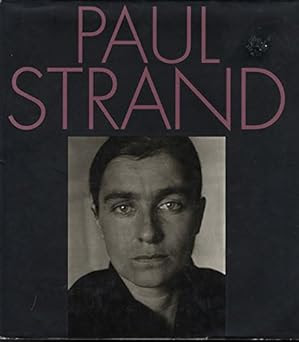
At Albuquerque's Main Library I found a  book devoted to the collection of Paul Strand's work at the Philadelphia Museum of Art.  In that was the mention of Strand's technique of enlarging negatives from Graflex medium format negatives for the purpose of enabling the production of bigger 8x10 contact prints.  That is the same process Edward Weston used throughout his career, which I had found puzzling as Weston's account is lacking in detail. The book revealed the full explanation, which is that both photographers early in their careers were making platinum (platinotype) prints. Those could only be made as contact prints as production of the positive image required exposure to ultraviolet light, available then only from the sun.

So, platinum printing is similar to the cyanotype process in that both are often undertaken by coating the paper manually shortly before rather lengthy exposure to ultraviolet. There is also some similarity in developing the exposed images.  The cyanotype images are developed simply by washing in water.  This is also true of some platinum prints, though it seems those are more commonly developed in chemical solutions.  Additional processing variations include treatments of specialty papers and additives to the developing solutions including mercury.

Both platinum and cyanotype prints can be rendered in a variety of tints.  Cyanotype prints are most often blue tinted, but they can also be produced with sepia tones by adding a mild acidic solution.

An excellent description of the platinum printing process can be found on the website of the National Gallery of Art.

Strand, Stieglitz, and Weston made their enlarged internegatives on glass plates for the purpose of getting prints.  A simpler process now available is to create a large digital image and then print that out on clear plastic sheets normally used in overhead projectors. I have used that technique with some of my cyanotypes with images coming from my medium format cameras.

The making of platinum prints has always been technically challenging and costly.  The current economic situation can only exacerbate that.  Cyanotypes are still easy and relatively cheap to make.  It is even possible to get pre-coated cyanotype paper; I have found it in a couple museum gift shops, usually marketed as suitable for teaching children about the print making process.


 A few of my cyanotypes: