My latest thrift store acquisition, a Canon TX.
 The Canon TX
went into production in 1974. This sturdy SLR was
an economy model with a 1/500 top speed and a center-weighted CdS meter.
The standard lens was an FD 50mm f1.8. The mount was also compatible
with the Canon FL-mount lenses. The lever on the camera front looks
like
a self-timer, but it is actually for dof preview, and it also permitted
metering in stopped down mode with the FL lenses. The camera's meter
was designed for a 1.35v mercury battery, but a 1.4v 675 hearing aid
battery seems to work just fine.
I bought my Canon TX in a thrift store after verifying that the basic
functions seemed to be working. The only obvious problem was an
inoperative frame counter. The jamming of the counter was clearly due to
the glue having dried up on the window, letting it fall down onto the
counter disk. So, I proceeded with the removal of the top to remedy the
problem.
Top deck removal proved to be pretty similar to most cameras of this
type. After taking out the four small screws holding the top in place
it is necessary to remove the winder, the shutter setting dial and the
rewind crank. Under the retaining disk holding on the wind lever, I
found a second disk which comes off in a clock-wise direction. Before
removing the shutter dial, I set it to 1/500 and the ASA to 25,
following some advice I found from Rick Oleson, also noting the position
of the actuating post and the slot it went into.
The rewind knob screws off easily, but one must be careful in the
process not to lose two small parts. There is a small brass washer just
under the knob. There is also an exceedingly small ballbearing which
will fall out when you remove the shaft by pushing it down into the
camera, so it is important to do this over something that will catch the
little devil.
Fixing the frame counting window just required a small bead of glue.
When I proceeded to reassembly I was a little apprehensive about where
that ballbearing was going. Shining a light down into the hole for the
shaft, I could see that there was a hole in the brass casing that looked
like it would fit the ballbearing. I put a little grease on the
ballbearing to make it sticky and easy to manipulate, and eased it into
the hole on the end of a toothpick. Then, I was able to insert the
shaft without difficulty and, as I suspected, the ballbearing served as a
detant to hold the shaft steady in both its extended and closed
positions.
As with most Japanese cameras of the same era, the light seals were
badly deteriorated. I didn't see any leaks in the roll I put through
the camera, but it seemed prudent to at least replace the seal that is
adjacent to the back hinge. The mirror bumper was falling apart too, so
that also got replaced.
A final precaution about using the TX: a lens cap is essential to keep
the meter's battery from running down as there is no on/off switch for
that purpose.
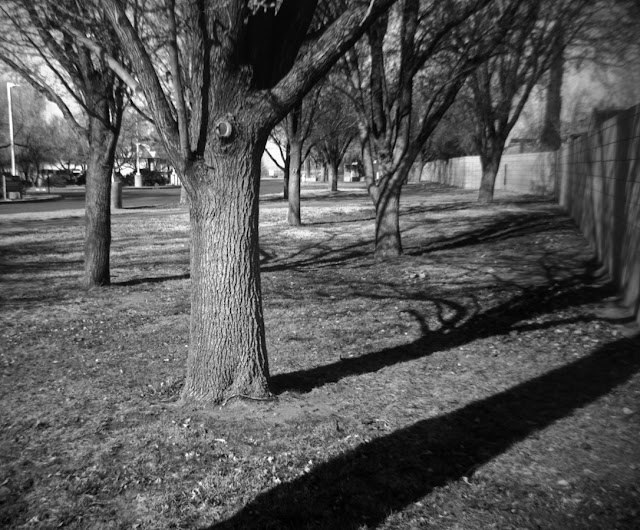
Some photos from the TX:
The
Canon TX Manual is at the Butkus site.